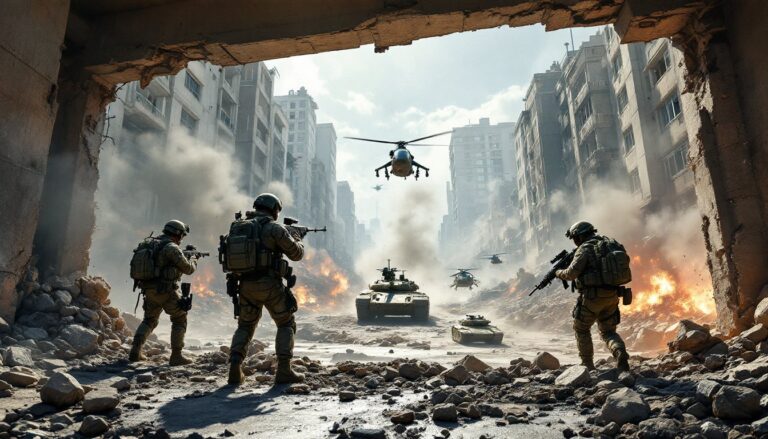
Battlefield tips can transform an average player into a squad MVP. The franchise rewards tactical thinking, teamwork, and smart decision-making more than raw reflexes alone. Whether someone is new to the series or returning after a break, mastering the fundamentals makes a measurable difference in performance.
This guide covers the battlefield tips that separate top-tier players from the rest. From map awareness to vehicle usage, these strategies apply across Battlefield titles and help players contribute more to their team’s success. Let’s get into it.
Table of Contents
ToggleKey Takeaways
- Master map awareness by memorizing choke points, flanking routes, and high-traffic zones to anticipate enemy movements.
- Match your loadout to the map and game mode—use SMGs for close quarters and rifles for open areas.
- Coordinate with your squad using voice chat or pings, as teamwork consistently beats individual skill in Battlefield.
- Use gadgets strategically; a well-timed grenade or smoke can turn the tide of battle more than gunfire alone.
- Learn vehicle strengths and weaknesses, and always support or counter them with coordinated infantry play.
- These battlefield tips apply across all titles—focus on positioning, communication, and role balance to maximize your team’s success.
Master Map Awareness and Positioning
Map awareness is the foundation of every successful battlefield strategy. Players who understand terrain, sightlines, and spawn points gain a significant advantage over those who simply run toward objectives blindly.
Learn the Maps
Spending time in each map pays dividends. Players should memorize key locations: choke points, sniper positions, flanking routes, and areas with natural cover. Knowing where enemies typically appear helps players anticipate threats before they materialize.
High-traffic zones deserve special attention. Certain corridors and capture points consistently see heavy action. Smart players avoid running through these areas without a plan.
Position for Success
Good positioning means more than finding a hiding spot. It means placing oneself where they can engage enemies effectively while minimizing exposure. Players should:
- Stay near cover at all times
- Avoid standing in open areas
- Use elevation when possible
- Check corners before advancing
The best battlefield tips involve thinking two steps ahead. Where will enemies come from? Where is the nearest escape route? Players who ask these questions survive longer and rack up more kills.
Use the Minimap
The minimap reveals enemy positions, teammate locations, and objective status. Glancing at it every few seconds provides critical intel. When teammates spot enemies, those positions appear on the minimap. Ignoring this free information is a mistake many players make.
Choose the Right Loadout for Your Playstyle
Loadout selection directly impacts battlefield performance. A mismatched loadout creates unnecessary difficulty and limits a player’s effectiveness.
Match Weapons to Range
Different maps and game modes favor different engagement distances. Close-quarters maps call for SMGs and shotguns. Open maps with long sightlines reward assault rifles and sniper rifles. Players should adjust their loadout based on where they expect to fight.
Experimenting with different weapons helps players find their preferences. Some weapons feel better than others depending on personal playstyle. Stats matter, but comfort matters more.
Pick the Right Class
Each class serves a distinct role. Assault classes excel at frontline combat. Support classes provide ammunition and suppressive fire. Medics keep teammates alive. Engineers handle vehicles and equipment.
Players should pick a class that matches both their preferences and their squad’s needs. A team with four snipers will struggle to capture objectives. Balance wins matches.
Don’t Ignore Gadgets
Gadgets often determine the outcome of fights. Grenades clear rooms. Smoke provides cover for advances. Anti-vehicle equipment stops tanks. Medical supplies keep the push going.
Many players focus exclusively on their primary weapon and forget about gadgets. This is a mistake. The best battlefield tips include using every tool available. A well-timed gadget can accomplish what bullets cannot.
Communicate and Coordinate With Your Squad
Battlefield rewards teamwork more than most shooters. A coordinated squad of average players will often defeat a group of skilled lone wolves.
Use Voice Chat or Pings
Communication keeps everyone on the same page. Calling out enemy positions, requesting supplies, and coordinating attacks creates massive advantages. Players without microphones can use the ping system to mark enemies and points of interest.
Even basic callouts help. “Enemy behind the building” or “tank incoming” gives teammates time to react. Information wins firefights.
Stick Together
Squad spawning is a powerful mechanic. Teammates can spawn on squad members who are alive and not under fire. Staying near squadmates keeps the pressure on objectives and reduces the time spent running from spawn points.
Players who wander off alone die alone. They also deprive their squad of a spawn point. The math is simple: together beats apart.
Play Your Role
Squad members should complement each other. A squad needs someone to heal, someone to provide ammunition, and someone to deal with vehicles. When everyone plays their role, the squad functions as a unit.
Players can still get kills while supporting their team. Medics who revive teammates and then kill the enemy who downed them contribute more than players who only focus on their K/D ratio.
Use Vehicles and Equipment Effectively
Vehicles change the flow of battle. A single tank or helicopter can dominate an objective or crumble under focused fire. Knowing how to use, and counter, vehicles matters.
Learn Vehicle Basics
Each vehicle type has strengths and weaknesses. Tanks deliver heavy firepower but move slowly. Helicopters provide mobility and air support but remain vulnerable to anti-air weapons. Transport vehicles move troops quickly but offer limited protection.
Players should practice with vehicles in less competitive modes before taking them into ranked matches. A wasted vehicle hurts the entire team.
Coordinate Vehicle Operations
Vehicles work best with infantry support. Tanks without ground troops nearby fall to flanking engineers. Helicopters without a gunner lose half their effectiveness.
Smart players communicate with vehicle operators. Spotting enemies for tanks, clearing anti-air positions for helicopters, and repairing damaged vehicles all contribute to battlefield success.
Counter Enemy Vehicles
Enemy vehicles require a response. Ignoring a tank that’s farming kills on an objective leads to defeat. Players should equip anti-vehicle weapons when facing heavy armor.
Engineers carry the best anti-vehicle tools, but other classes can help too. Explosives, stationary weapons, and coordinated fire all damage vehicles. A team that focuses fire on vehicles neutralizes them quickly.