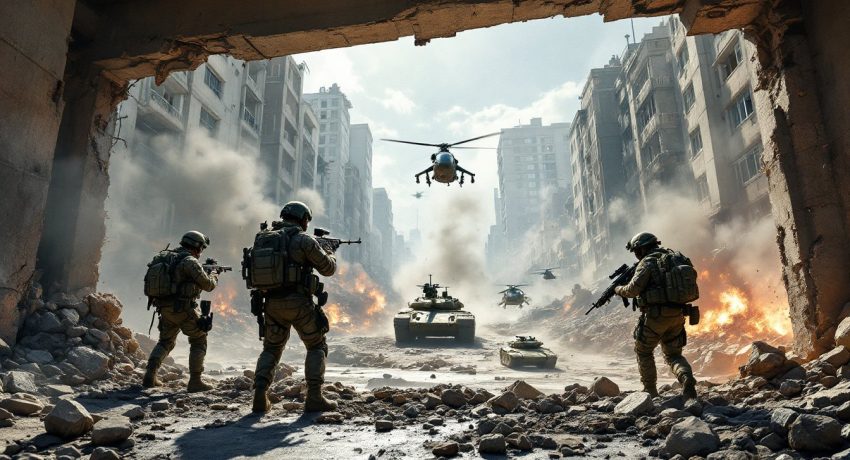

The <a href="https://jimmykicks.com/battlefield-board-game-your-complete-guide-to-tabletop-warfare-in-2026/”>Battlefield franchise has dominated large-scale multiplayer gaming for over two decades, and 2026 is no exception. Unlike faster-paced competitors that prioritize twitch reflexes, Battlefield rewards teamwork, tactical positioning, and smart use of vehicles and destructible environments. Whether you’re jumping into Battlefield on PS5, exploring Battlefield 6 on Game Pass, or discovering what makes Battlefield EA’s approach unique, mastering the core mechanics is essential. This guide breaks down everything you need to know to dominate on any platform, from gunplay fundamentals to squad coordination.
Table of Contents
ToggleKey Takeaways
- Battlefield game success depends on teamwork, tactical positioning, and smart vehicle usage rather than twitch reflexes alone, with objectives like flag captures determining victory over raw kill counts.
- Master core gunplay fundamentals including recoil control, burst-fire discipline, and weapon-specific patterns through practice modes to build muscle memory that translates across all platforms.
- Each Battlefield class serves a critical squad role—medics revive teammates, engineers counter vehicles, support provides ammo, and recon controls sightlines—making gadget selection more impactful than weapon choice.
- Environmental destruction actively reshapes maps by collapsing buildings, creating new flanking routes, and forcing repositioning, turning destruction into a core strategic tool rather than visual effect.
- Map awareness, spawn location knowledge, and minimap discipline win matches by preventing wasted sprints and enabling squad coordination on objectives before enemy pushes.
- Stick with your squad through respawns and defensive holds rather than playing as a lone wolf, as squad spawning multiplies team effectiveness and keeps players close to critical objectives.
What Makes Battlefield Stand Out in Modern Gaming
Battlefield thrives on something most competitors can’t replicate: massive player counts and destructible environments. Standard matches run 64–128 players across sprawling maps, creating genuine chaos that rewards both individual skill and squad coordination.
The franchise’s real magic lies in combined arms gameplay. Infantry don’t dominate alone, tanks, helicopters, jets, and support vehicles occupy the same space, forcing constant adaptation. A skilled pilot can turn a match, but a single engineer with a rocket launcher can ground an entire air force. This rock-paper-scissors dynamic means no single playstyle reigns supreme.
DICE’s Frostbite engine powers destruction that actually matters. Collapsing buildings reshape sightlines, breached walls create new flanking routes, and cratered terrain forces repositioning. Destruction isn’t visual fluff, it’s a core strategic tool. Meanwhile, recent Battlefield 2042 PS5 releases maintain this philosophy while pushing graphical boundaries.
Finally, Battlefield prioritizes objectives over killstreaks. Conquest requires holding flags, Rush demands coordinated pushes on M-COMs, and Breakthrough locks teams into evolving sectors. Racking up 30 kills means nothing if your team loses all control points. This focus on teamwork separates Battlefield players who understand the meta from those just chasing eliminations.
Core Gameplay Mechanics You Need to Master
Before you can dominate, nail the fundamentals. Gunplay requires recoil control and burst discipline. Most weapons benefit from short, controlled bursts rather than full-auto spraying, especially at medium distance. Learn your weapon’s recoil pattern by spending time in practice modes, muscle memory matters more than raw aim.
Movement separates novices from veterans. Sprinting in open terrain gets you killed. Instead, practice sliding into cover, crouch-walking when exposed, and using contextual vaulting over obstacles. Prone positioning offers stability for shots but roots you in place, use it only when you’ve verified clear sightlines.
Map awareness wins matches. Your minimap is your lifeline. Learn spawn locations, objective positions, and chokepoints before playing competitively. Sound cues matter too, footsteps, vehicle engines, and gunfire all tell stories about enemy positions and numbers.
The ticket system determines victory conditions. Your team shares a ticket pool that depletes when players die or objectives flip to enemies. In Conquest, losing control points bleeds tickets faster. Understanding ticket math means knowing when to push hard and when to consolidate positions.
Vehicle Combat and Destruction
Vehicles aren’t killstreak rewards, they’re objectives unto themselves. Tanks anchor frontlines with suppressive firepower. Light armor skirts flanks and captures flags quickly. Attack helicopters suppress entire areas but fall instantly to coordinated AA fire. Jets control airspace and deny helicopter spawns.
Each vehicle type has hard counters. Engineers equipped with C4, mines, or rocket launchers hunt armor. Dedicated AA systems (stationary guns, certain vehicles) shred air units. Understanding these matchups prevents wasteful vehicle usage. A talented pilot means nothing if the enemy team fields three engineers.
Destruction opens tactical possibilities constantly. Top Battlefield Games Worth highlights how recent titles use environmental destruction to shift momentum. Collapsing buildings deny sniper nests, blown walls create flanking routes, and cratered terrain forces ground vehicles into predictable paths. Master destruction and you control the map.
Choosing Your Class and Loadout for Success
Class selection defines your role in squad survival. Assault/Medic classes pack rifles and healing tools. Your job: revive fallen squadmates, push objectives, and sustain your team’s presence. A good medic dictates victory conditions, dead teammates can’t hold flags.
Engineers handle vehicles and close-quarters threats. Equip SMGs or carbines for mobility, pair with rocket launchers or C4 for anti-tank work. Your squad depends on you stopping armor pushes and securing objective areas where vehicles can’t help.
Support classes field LMGs and ammo supplies. Drop ammo crates constantly, your squad’s sustained fire wins engagements. Suppression from LMG fire also degrades enemy aim, giving your team advantages in open-field battles.
Recon specialists wield sniper rifles or DMRs for long-range superiority. Spot enemies for your squad, control high-ground positions, and deny sightlines. A disciplined recon player compounds your team’s information advantage.
Loadout flexibility matters more than chasing “meta” weapons. Spend time learning 2–3 guns deeply rather than constantly switching. Understand your weapon’s effective range, recoil pattern, and magazine capacity. Weapon balance patches shift frequently, current meta weapons become mediocre after patches. Versatility beats trend-chasing.
Gadget selection trumps gun selection in many situations. Battlefield Tips: Essential Strategies emphasizes using gadgets as primary tools, not backup options. Your medkit, ammo box, or repair tool shapes matches more than raw firepower.
Essential Tips for Competitive and Casual Play
Play the objective. Seriously. Casual or competitive, flag captures and objective holds determine winners. A player with 15 kills and zero captures costs the match. Conversely, a 5-kill medic who revives eight teammates wins wars.
Stick with your squad. Lone wolves feed killstreaks. Squad spawning on alive teammates multiplies team effectiveness. If your squad leads an assault, follow. If it defends a flag, defend. Solo players die fast and respawn far from objectives.
Use gadgets constantly. Drop ammo packs when your LMG fires, place medkits at choke points, set C4 on expected vehicle routes. These actions fill downtime between engagements and turn average players into essential squad members.
Learn map flow before grinding ranked modes. Conquest maps flow through predictable lanes. Rush maps favor defensive setup in early phases. Understanding where teams naturally congregate prevents wasted sprints to empty areas. Battlefield Ideas: Creative Strategies explores advanced positioning concepts, worth studying before competitive matches.
Control recoil in bursts. Full-auto spraying only works at knife-fighting distance. Tap or burst-fire at range. Practice tracking while managing vertical recoil, most guns pull upward as you fire.
Multiplayer Modes and Map Strategies
Conquest dominates Battlefield multiplayer. Matches pit teams against each other across 5–7 control points. Strategy shifts based on spawn locations and natural choke points. North spawners often control northern flags, leverage that advantage early. Mid-map objectives determine match tempo. Holding three flags slowly bleeds enemy tickets, forcing desperate pushes that your team repels.
Destruction and vehicle usage peak in Conquest. Use environmental destruction to collapse sniper nests, clear vehicle paths, and create new cover. Vehicular control wins on large maps, deny enemy armor spawns and you’ve won half the battle.
Rush and Breakthrough compress matches into linear progression. Attackers push sequential M-COMs or sectors while defenders establish fallback positions. Early offense should focus on overwhelming single objectives. Defenders counter by placing explosives and establishing overlapping sightlines. These modes reward coordinated teamwork more than raw gunplay.
Team Deathmatch removes objectives but demands positioning excellence. Control central areas, establish crossfire angles, and trade efficiently. Respawn time means every death impacts momentum. Recent releases on Battlefield 6 Game Pass and Battlefield EA platforms maintain this focus on mechanical skill and map control.
Portal and custom operations (depending on title) let squads create unique rulesets. These modes reward creativity and squad cohesion, experiment freely to develop team synergy before ranked matches. According to Windows Central’s coverage of Game Pass releases, these custom modes significantly extend gameplay longevity.
Map knowledge compounds advantages exponentially. Spawn locations, vehicle spawn points, objective distances, and sightline density all influence strategy. The Loadout’s loadout guides often reference specific map considerations alongside weapon recommendations. Spend practice matches memorizing one map completely rather than rushing through five maps casually.
Conclusion
Battlefield 2026 rewards teams that master vehicles, destruction, and objective focus. Success demands class specialization, gadget usage, and map awareness, not just twitch aim. Whether you’re exploring Battlefield 6 Game Pass integration, diving into Battlefield 2042 PS5 performance, or discovering Battlefield EA’s gameplay philosophy, these fundamentals apply universally. Squad coordination and tactical thinking separate dominant players from the rest. Master these mechanics and you’ll control matches regardless of platform or game mode.