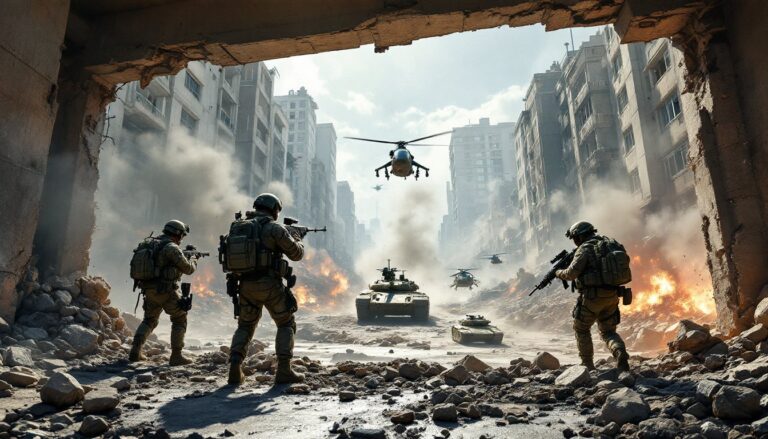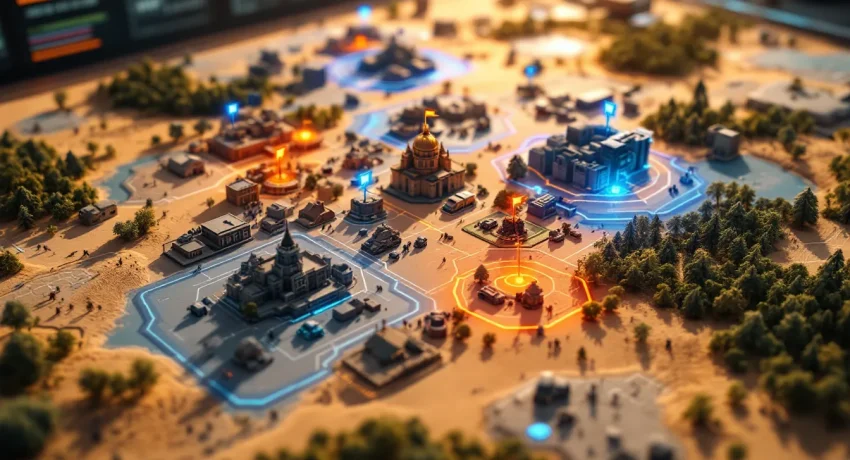

Battlefield maps aren’t just pretty backdrops, they’re the core of every firefight, the reason a squad wipes or clutches the win, and what separates a 10-kill match from a 40-kill rampage. Whether you’re navigating the tight corridors of Operation Metro or commanding tanks across the sprawling deserts of El Alamein, understanding map layouts, chokepoints, and rotations makes the difference between cannon fodder and MVP. This guide breaks down the franchise’s map design philosophy, spotlights iconic battlegrounds, and delivers map-specific tactics to help you dominate Conquest, Breakthrough, and everything in between. You’ll learn how terrain, vehicle spawns, and class loadouts interact with each map type, plus how to leverage custom Portal creations and community favorites. If you’ve ever spawned in and felt lost, or wondered why the enemy always seems to hold the high ground, you’re in the right place.
Table of Contents
ToggleKey Takeaways
- Battlefield maps are designed around three pillars—scale, variety, and chaos management—and fall into four distinct archetypes: infantry-focused urban, combined-arms balanced, vehicle-heavy open, and experimental asymmetric layouts.
- Mastering map-specific strategies for Conquest and Breakthrough modes—such as controlling central flags, identifying vehicle spawn points, and executing smart rotations—directly improves round wins and team performance.
- High ground elevation, understanding hard versus soft cover, and reading destructible environments are critical terrain advantages that separate top-tier players from average ones on every Battlefield map.
- Class loadout optimization varies dramatically by map type: assault and medic dominate tight urban maps like Operation Metro, while engineer and support excel on vehicle-heavy maps like Hamada and Panzerstorm.
- Map knowledge—including callout locations, minimap awareness, and squad communication—matters more than raw aim, as the best players position themselves in the right place at the right time through terrain and tactical understanding.
- Iconic maps like Caspian Border, Amiens, and Devastation became classics because their design rewards skillful play across all engagement ranges, while Portal remakes and custom community modes continue to evolve the Battlefield experience.
Understanding Battlefield Map Design Philosophy
DICE has always approached Battlefield map design with a three-pillar philosophy: scale, variety, and chaos management. Maps need to support 64 to 128 players (depending on the title and platform), offer multiple engagement ranges, and provide enough objectives that no single chokepoint becomes a round-ending grind. But the execution of that philosophy has shifted dramatically over two decades.
Core Map Types Across the Franchise
Battlefield maps typically fall into four archetypes:
- Infantry-focused urban maps: Tight streets, multi-story buildings, limited vehicle access. Think Operation Metro, Seine Crossing, or Devastation. These reward close-quarters loadouts, aggressive pushes, and vertical map knowledge.
- Combined-arms balanced maps: A mix of open fields, towns, and vehicle lanes. Caspian Border and Golmud Railway exemplify this. Success here demands class flexibility and squad coordination.
- Vehicle-heavy open maps: Wide sightlines, long travel distances, armor and air superiority. El Alamein, Hamada, and Orbital fall here. Infantry often plays a support role or hunts vehicles from cover.
- Experimental/asymmetric maps: Unique mechanics like the sandstorm on Sinai Desert or the behemoths on certain Battlefield 1 maps. These break standard flow and force adaptive tactics.
Understanding which archetype you’re loading into shapes your class pick, loadout, and positioning from the spawn screen.
Evolution of Map Design from Battlefield 1942 to 2042
Battlefield 1942 introduced sprawling, vehicle-centric maps with minimal verticality. Conquest was king, and maps like Wake Island set the template: multiple flags, long sightlines, and a rock-paper-scissors vehicle meta.
Battlefield 2 and 2142 refined commander assets and squad spawn mechanics, which influenced flag placement and cover design. Maps became slightly denser to support the new systems.
Bad Company 2 brought full destruction, which revolutionized map flow. Walls, buildings, and cover could vanish mid-round, forcing players to adapt. Maps like Arica Harbor and Valparaíso became dynamic puzzles.
Battlefield 3 and 4 balanced destruction with more urban verticality and tighter infantry zones. Operation Metro and Siege of Shanghai became instant classics, though Metro’s chokepoint grind divided the community.
Battlefield 1 embraced historical authenticity with trench warfare, bunkers, and weather systems. Maps like Amiens and Argonne Forest leaned into atmospheric immersion, while Sinai Desert and Fao Fortress offered vehicle-heavy sandboxes.
Battlefield V doubled down on fortifications and squad revives, which shifted map flow toward defensive holds and slower pushes. Maps like Devastation and Rotterdam rewarded tactical building use.
Battlefield 2042 scaled up to 128 players on PC and next-gen consoles, but the shift to larger, more open maps with fewer cover elements drew criticism at launch. Season updates and creative tactical approaches helped refine the experience, though the community remains split on map density.
Iconic Maps That Defined the Battlefield Series
Classic Maps: Operation Metro, Caspian Border, and Seine Crossing
Operation Metro is the franchise’s most controversial map. A linear three-flag Conquest layout funnels all 64 players into a subway chokepoint, creating a meatgrinder that rewards explosive spam, support suppression, and organized pushes. It’s either a chaotic thrill or a frustrating stalemate depending on team balance. The Battlefield 3 original and its Battlefield 4 remake both hit peak server population during prime hours, and Metro-only servers remain a staple.
Caspian Border represents balanced combined-arms design at its best. Five flags spread across forests, hills, a central tower, and open fields give every class a role. The tower offers a sniper perch and objective control, while the surrounding terrain supports flanking, vehicle duels, and squad rotations. It’s been remade multiple times for good reason.
Seine Crossing from Battlefield 3’s Close Quarters DLC compressed the action into tight Parisian streets. Verticality, destructible cover, and tight corners made it a favorite for competitive infantry play. Loadouts leaned heavily toward PDWs, shotguns, and close-range optics.
Fan-Favorite Battlefield 1 and V Maps
Battlefield 1’s Amiens nailed urban combined-arms balance. The French city’s wide main street allowed tank pushes, while side alleys and buildings gave infantry cover and flanking routes. The map’s atmosphere, artillery craters, collapsing facades, and the ever-present whistle of incoming shells, elevated immersion.
Argonne Forest was the opposite: a claustrophobic woodland where sightlines rarely exceeded 30 meters. Bunkers, trenches, and dense foliage made it a CQC nightmare in the best way. According to analysis from GamesRadar+, it consistently ranked among the top three most-played Operations maps.
Panzerstorm from Battlefield V delivered a vehicle lover’s dream. Rolling farmland, scattered villages, and long sightlines put tanks and planes center stage. Infantry played a support role, hunting armor with Panzerfausts and coordinating AT mine placements.
Devastation brought the series back to urban chaos. Set in a ruined Rotterdam, it featured multi-story rubble, tight streets, and constant building collapses. Squads that controlled the cathedral high ground dominated the round.
Modern Era: Battlefield 2042’s Most Played Maps
Battlefield 2042 launched with mixed reception on its maps, but several rose to the top of server rotations. Renewal offered a clean split between a lush biodome and arid desert, creating distinct combat zones within one map. The biodome’s interior became a brutal close-quarters grind, while the exterior favored vehicles and long-range engagements.
Breakaway delivered spectacular Antarctic scenery and verticality. The offshore oil rig and clifftop research station created natural chokepoints, while zip lines and ice caves added mobility options. Vehicles struggled on the slick terrain, giving infantry more agency than other 2042 maps.
Orbital, even though criticism for its open spaces, became iconic for the countdown rocket at the map’s center. Timing pushes around the launch sequence added a unique tactical layer. Post-launch updates added cover and tightened flag spacing, improving flow.
Season updates introduced the new battlefield map Stranded, set among beached cargo ships. Its tighter layout and increased cover addressed many launch complaints and quickly became a rotation favorite.
Map-Specific Strategies for Competitive Play
Conquest Mode: Controlling Key Points and Rotations
Conquest revolves around ticket bleed and flag majority. Holding one more flag than the enemy drains their tickets, simple in theory, brutal in execution.
Key flag identification wins rounds. Most Conquest maps have one or two central flags that see constant action. On Caspian Border, the hilltop tower controls sightlines and splits the map. On Siege of Shanghai, the skyscraper (until it collapses) dominates. Those learning core mechanics should prioritize learning which flags matter most on each map.
Successful teams don’t zerg between flags, they rotate smart. If you hold three of five flags, defend them. Pushing for a fourth often leaves gaps the enemy exploits. Assign one or two squads to mobile defense: watch the map, respond to blinking flags, and cut off enemy rotations before they snowball.
Vehicle control matters more in Conquest than any other mode. Tanks, helis, and jets respawn at set intervals. Good squads time vehicle spawns, deny enemy armor, and use vehicles to apply cross-map pressure. On Golmud Railway, losing armor control often means losing the round.
Breakthrough Tactics: Attacking and Defending Sectors
Breakthrough (formerly Rush in some titles) is asymmetric: attackers have limited respawn tickets and must capture both objectives in a sector to advance. Defenders hold ground and drain attacker tickets.
Attacking requires focus fire. Splitting the team between both objectives dilutes pressure. Concentrate on one, break through, then swing to the second with a man advantage. Smart tactical approaches emphasize smoke grenades to cross open ground, squad spawns to maintain pressure, and vehicle pushes to clear defenders.
Timing is everything. Don’t spawn in until your squadmates are in position. Staggered spawns let defenders farm kills. Coordinate a simultaneous push after a vehicle softens the defense.
Defending rewards patience and crossfire setups. Hold angles that cover both objectives, place mines on vehicle routes, and use gadgets to deny entry points. Falling back too early gives attackers free ground. Holding too long gets you surrounded. The best defenders identify when a point is lost and reposition to the next sector before getting wiped.
On maps like Operation Metro in Breakthrough, the subway stage becomes the pivotal hold. Defenders who set up overlapping fields of fire on the escalators can stall a round for ten minutes or more.
Close-Quarters Combat vs. Open-Field Engagements
CQC dominance comes from movement, not just aim. Slide and jump around corners to break enemy crosshair placement. Pre-aim common angles. Use hipfire on shotguns and high-ROF SMGs inside 10 meters. Sound cues, footsteps, reloads, gadget deploy, give away enemy positions.
Vertical plays win CQC fights. Don’t fight through the door: blow out a wall or take the stairs. Enemies expect horizontal pushes. Dropping from above or breaching from below catches them looking the wrong way.
Open-field movement kills more players than sniper skill. Never sprint in straight lines. Use terrain dips, rocks, and destroyed vehicles as waypoints. Prone crawling in grass works on some maps (Panzerstorm, Hamada), but experienced players shoot at suspicious bushes anyway.
When crossing open ground, move during distractions. If a tank is shelling a building or the enemy is focused on another squad, that’s your window. According to competitive analysis shared on The Loadout, top-tier players minimize time in the open by planning routes before moving.
Reading the Terrain: Environmental Advantages on Every Map
Leveraging Elevation and High Ground
High ground isn’t just a Star Wars meme, it’s a game-changer. Elevation gives you sightline advantage, forces enemies to aim upward (which messes with their natural aim angle), and lets you break line of sight by stepping back.
On Caspian Border, holding the tower gives view over four of five flags. On Kaleidoscope, the stadium rooftop offers 360-degree overwatch. On Argonne Forest, the few elevated bunker positions become critical holds because the rest of the map is flat trenches.
When attacking high ground, don’t walk up the main path. Look for alternate routes, use smoke, or suppress defenders with sustained fire while teammates push. Vehicles with elevation (tanks on hills, helis overhead) should be priority targets.
Using Cover, Buildings, and Destructible Environments
Battlefield’s destruction means cover is temporary. That wall protecting you might vanish after two tank shells. Smart players constantly reassess their position.
Hard cover (concrete, thick walls, vehicles) stops bullets. Soft cover (wood, thin walls) stops sightlines but not damage. Concealment (bushes, smoke) hides you but offers no protection. New players confuse the three and die behind a wooden fence wondering why.
Buildings offer verticality, sightline control, and ambush potential. But they’re also death traps. A single enemy with C4 or a vehicle focusing fire can collapse the structure and kill everyone inside. Always have an exit plan.
When defending a building, don’t stand in windows, stand back in the room where you can see out but enemies see only darkness. Peek, shoot, retreat. On maps like Devastation, players who understand positioning dominate by holding second-floor rooms with clear sightlines and multiple exits.
Vehicle Spawn Points and Control Zones
Vehicle spawns are marked on the map and respawn on timers. Controlling these zones denies the enemy armor and air support, which swings rounds.
On vehicle-heavy maps like Golmud Railway or Hamada, the team that dominates vehicle spawns usually wins. Assign a squad to vehicle denial: camp enemy spawns, mine the roads, or use anti-air to suppress their air support.
Vehicle control zones (capture points that spawn vehicles) should be prioritized in Conquest. Losing your team’s vehicle spawn puts you on the defensive for the entire match. If you can’t hold it, destroy the vehicles before retreating so the enemy can’t use them.
Class and Loadout Optimization by Map Type
Best Classes for Urban and Infantry-Focused Maps
On tight infantry maps like Operation Metro, Seine Crossing, or Locker, Assault and Medic classes dominate.
Assault (or equivalent in different titles) excels with:
- High-ROF carbines or SMGs (Vector, AS-VAL, MP7)
- Shotguns for extreme CQC (Model 10-A, DAO-12)
- Frag grenades or impact grenades for clearing rooms
- Medkits or ammo (depending on title and class system)
Medic becomes critical on these maps because deaths happen fast and respawn distance is long. Smoke grenades for reviving teammates under fire, and self-loading rifles that balance mid-range punch with close-quarters usability.
Support works for defensive holds with LMGs for suppression, claymores for flank protection, and ammo crates to sustain the grind.
Recon struggles on pure infantry maps unless running aggressive carbine or DMR loadouts. Sitting back with a sniper rifle on Metro means you’re not on the objective, and that loses rounds.
Loadouts for Wide-Open Vehicle-Heavy Maps
On maps like Panzerstorm, Hamada, or Orbital, Engineer and Support classes carry the team.
Engineer loadouts should prioritize:
- Anti-vehicle launchers (Javelin, SRAW, RPG-7)
- Carbines or DMRs for mid-range infantry fights
- Repair tools if you’re running with friendly armor
- Mines placed on vehicle routes (especially near flags)
Support brings sustained fire and ammo resupply, critical when your team is holding a point against vehicle pushes.
Recon actually shines here. Long sightlines mean bolt-action rifles are viable, and spotting gadgets (motion sensors, spotting scopes) give your team intel on vehicle movements. According to discussions on Dexerto, competitive squads on open maps always run at least one dedicated recon for intel.
Assault/Medic should run DMRs or battle rifles for range and pick positions near cover. You’re less effective than on infantry maps, but healing and revives still matter.
Vehicle loadouts matter as much as infantry. Tanks should run either anti-infantry (HE shells, canister shot) or anti-armor (AP shells, smoke) depending on the threat. Helis benefit from flares and guided missiles. Transport vehicles should prioritize speed and spawn beacons to maintain map presence.
Community-Favorite Custom and Portal Maps
Top Player-Created Maps and Modes
Battlefield’s community has always pushed the boundaries with custom servers and rulesets, but Battlefield 2042’s Portal system took it further by letting players remix assets from 1942, Bad Company 2, Battlefield 3, and 2042.
Popular custom modes include:
- Gun Game on close-quarters maps: Cycle through weapons with each kill. First to complete the list wins. Works great on maps like Noshahr Canals or Breakaway’s interior sections.
- Zombies/Infection modes: One team has knives only and must infect the other team. Last survivors win. These modes exploded in popularity on maps with tight corridors and limited escape routes.
- Historical recreations: Players recreate famous WW2 or modern battles using Portal’s logic editor, complete with period-accurate weapons and vehicles. Wake Island and El Alamein remakes are community staples.
- No-HUD hardcore modes: Removes UI elements, increases damage, and rewards map knowledge and communication. These modes attract veteran players looking for immersion and challenge.
Many custom modes never see official promotion but maintain dedicated server communities. The best battlefield game experiences often come from these player-driven innovations rather than official playlists.
Nostalgic Remakes Through Battlefield Portal
Portal’s biggest draw is nostalgia. Remakes of classic maps using modern graphics and mechanics let veterans revisit their favorite battlegrounds.
Caspian Border 2042 features updated graphics, more destruction, and modern vehicle balance, but retains the flag layout and terrain that made the original iconic.
Battle of the Bulge and El Alamein bring 1942’s vehicle-heavy WW2 combat to modern fidelity. The maps play similarly to the originals but with refined hit detection and physics.
Arica Harbor from Bad Company 2 returned with full destruction and the series’ signature collapsing buildings. The remake captures the original’s flow while benefiting from 2042’s improved Frostbite engine.
Valparaíso and Noshahr Canals also got Portal treatment, though community feedback suggests some remakes lose the magic when scaled to 128 players. The original design philosophy assumed 32-64 players, and doubling that creates chaos rather than strategy.
Best practice: when playing Portal remakes, look for servers that enforce era-accurate player counts. A 64-player Arica Harbor feels right. A 128-player version turns into a spawn-kill festival.
Tips for Learning New Maps Quickly
Minimap Awareness and Callout Locations
Your minimap is the most underused tool in Battlefield. It shows:
- Friendly positions (blue markers)
- Spotted enemies (red markers)
- Objective status (flag colors and blinking indicators)
- Vehicle positions (friendly and sometimes enemy)
- Squadmate requests and pings
Good players glance at the minimap every few seconds. Great players read it constantly and make decisions based on the information flow.
Learn callouts for each map. Competitive squads use shorthand: “Tower one-eighty” means the tower with an enemy at roughly 180 degrees. “C balcony” identifies the second-floor overlook at C flag. Without callouts, your squad is just shouting “over there.” into voice chat, useless.
Most maps have unofficial community callouts that emerge organically. Search “[map name] callout guide” or watch comp players stream to pick them up. Within three rounds, you’ll know “Church,” “Gas station,” “Warehouse,” and other landmarks by name.
Solo Practice vs. Squad Communication
Solo practice in empty servers (or low-pop servers) lets you explore without pressure. Walk the map, identify sightlines, check vehicle spawn locations, and test flanking routes. Spend 15 minutes doing this before jumping into a 64-player match and you’ll already know more than half the lobby.
But Battlefield is a squad game. Communication multiplies your effectiveness. Even a duo on voice comms can shut down entire squads by coordinating:
- Crossfires: one player baits, the other shoots from an off-angle
- Revive chains: stay close enough to revive but far enough that one explosive doesn’t kill both
- Vehicle support: one repairs, one guns
Full five-player squads with comms become unstoppable when they rotate together, share spawn points, and coordinate class gadgets. You don’t need to be friends, just willing to talk and listen.
If you’re solo, enable in-game VoIP and at least listen. Responding to requests (“Need ammo,” “Attack this objective”) builds trust and encourages teammates to stick with you. Players who adapt faster tend to watch map flow and squad behavior rather than tunnel-visioning on kills.
Conclusion
Battlefield maps are layered puzzles where terrain, class choice, vehicle control, and squad coordination intersect. The difference between struggling at the bottom of the leaderboard and carrying your team often comes down to map knowledge: knowing which flags matter, where vehicles spawn, how to use elevation, and when to rotate versus when to hold.
Every map archetype, from the close-quarters chaos of Metro to the vehicle-heavy expanse of Panzerstorm, demands different loadouts, tactics, and mindsets. Iconic maps like Caspian Border and Amiens became classics because their design rewarded skillful play across all engagement ranges and roles. Modern iterations and the new battlefield map releases through Portal and seasonal updates continue evolving the formula, though community debate over map density and player counts remains lively.
Whether you’re learning callouts for competitive play, experimenting with custom Portal modes, or just trying to survive your first Conquest match, the core principle stays the same: read the map, communicate with your squad, and adapt. The best players aren’t necessarily the best shooters, they’re the ones who understand the map well enough to always be in the right place at the right time.