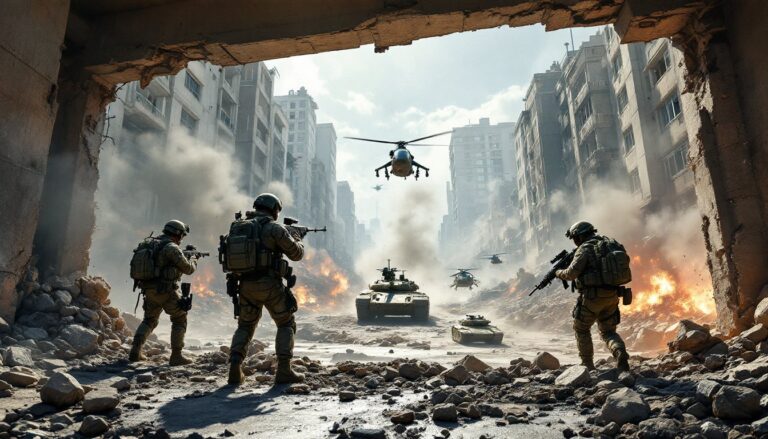

Battlefield for beginners can feel overwhelming at first. Large maps, 64-player battles, and vehicles flying overhead create chaos that’s hard to process. But here’s the good news: every skilled player started exactly where new players stand today.
This guide breaks down everything a newcomer needs to know. From understanding the franchise’s history to picking the right game and mastering core mechanics, readers will find practical advice they can use immediately. No fluff, no generic tips, just clear direction for anyone ready to jump into one of gaming’s most iconic military shooters.
Table of Contents
ToggleKey Takeaways
- Battlefield for beginners works best when starting with Battlefield 2042 or Battlefield V, as both offer smoother onboarding and active player communities.
- Squad play is essential—always join a squad, spawn on teammates, and follow squad leader objectives to maximize your impact.
- Focus on playing objectives rather than chasing kills, since capturing and defending points wins matches and earns more experience.
- The Medic class is ideal for battlefield beginners because self-healing extends survivability and reviving teammates builds map awareness.
- Master core habits like using cover constantly, watching the minimap, and spotting enemies to gain an advantage over opponents.
- Learn one map at a time to understand routes, chokepoints, and vehicle spawns before expanding to others.
Understanding the Battlefield Series
The Battlefield series launched in 2002 with Battlefield 1942. DICE, the Swedish developer behind the franchise, introduced something revolutionary: large-scale warfare combining infantry combat, vehicles, and team objectives. That formula still drives the series today.
Unlike faster-paced shooters like Call of Duty, Battlefield games emphasize squad cooperation and strategic positioning. Players capture control points, defend objectives, and coordinate with teammates across massive maps. A single match can last 20-30 minutes, with momentum shifting constantly.
The franchise spans multiple eras. Battlefield 1942 covered World War II. Battlefield Vietnam (2004) brought jungle warfare. The Bad Company spin-offs added destructible environments. Battlefield 3 and 4 refined modern combat. Battlefield 1 returned to World War I, while Battlefield V revisited World War II. Most recently, Battlefield 2042 jumped to a near-future setting.
For battlefield beginners, understanding this variety matters. Each entry offers different weapons, vehicles, and gameplay feels. Some players prefer the slower pace of historical titles. Others want the gadgets and speed of modern entries. There’s no wrong choice, just personal preference.
Choosing the Right Battlefield Game
New players often ask which Battlefield game they should start with. The answer depends on a few factors: platform availability, active player populations, and personal taste.
Battlefield 2042 represents the current entry point for most beginners. It receives ongoing updates and maintains healthy player counts across PC, PlayStation, and Xbox. The 2042 experience includes maps and content from earlier games through its “Portal” mode, giving newcomers a taste of franchise history.
Battlefield V offers excellent gunplay and a World War II setting. Its learning curve feels gentler than 2042’s chaotic battles. Player populations remain active, especially on console platforms.
Battlefield 4 still attracts dedicated fans even though releasing in 2013. Its modern military setting and polished mechanics make it a strong choice for battlefield beginners who prefer contemporary warfare. Server browsers show active matches daily.
Battlefield 1 delivers a unique World War I experience. The weapons feel distinct from other shooters, and the atmosphere stands out. But, finding full servers can prove challenging depending on region and time.
Here’s a simple breakdown:
| Game | Setting | Best For |
|---|---|---|
| Battlefield 2042 | Near-future | Active community, latest features |
| Battlefield V | World War II | Balanced gameplay, good tutorials |
| Battlefield 4 | Modern | Classic feel, dedicated servers |
| Battlefield 1 | World War I | Unique atmosphere, cinematic moments |
Most battlefield beginners should start with either 2042 or V. Both offer smoother onboarding experiences than older titles.
Essential Gameplay Mechanics to Master
Battlefield games share core mechanics that every beginner must learn. Mastering these fundamentals separates struggling newcomers from effective teammates.
Conquest and Breakthrough Modes
Conquest remains the signature Battlefield mode. Two teams fight to control capture points scattered across the map. Holding more points than the enemy drains their tickets. The team that runs out of tickets first loses.
Breakthrough operates differently. Attackers push to capture sectors while defenders hold them back. Attackers have limited respawns: defenders don’t. This mode creates intense, focused combat.
Squad Play
Squads form the backbone of Battlefield strategy. Players spawn on squad members, cutting travel time across large maps. Sticking with a squad multiplies effectiveness, lone wolves rarely contribute much.
Squad leaders mark objectives. Following these orders earns bonus points and helps coordinate team efforts. Battlefield beginners should always join a squad and stay close to teammates.
Vehicle Combat
Tanks, helicopters, jets, and transport vehicles change how battles flow. Learning to use, and counter, vehicles takes time. New players should start with transport vehicles or gunner positions before attempting tanks or aircraft.
Engineers and assault classes carry anti-vehicle weapons. Knowing when to switch loadouts based on enemy vehicle presence matters.
Spotting and Communication
Marking enemies with the spot button reveals their position to teammates. This simple action provides enormous value. Battlefield beginners should build a habit of spotting constantly.
Pinging locations also helps communicate without voice chat. Point out enemy positions, objectives to attack, or areas needing defense.
Tips for New Players
Raw mechanics only go so far. These practical tips help battlefield beginners climb the learning curve faster.
Play the objective. Kill counts mean nothing if the team loses. Capturing and defending points wins matches. Players who focus on objectives also earn more experience and unlock weapons faster.
Use cover constantly. Open ground equals death. Move between buildings, walls, craters, and vehicles. Sprint across gaps only when necessary.
Watch the minimap. The minimap reveals spotted enemies, friendly positions, and objective status. Glancing at it every few seconds prevents ambushes and shows where help is needed.
Resupply and heal teammates. Support and medic classes can drop ammo and health packs. Doing so earns points and keeps the team fighting. Even non-medics should revive downed squadmates when safe.
Learn one map at a time. Battlefield maps feel overwhelming initially. Focus on learning common routes, chokepoints, and sniper positions on one map before moving to others.
Adjust sensitivity settings. Default controller and mouse sensitivity rarely suits everyone. Spend time in the options menu finding comfortable aim settings. Lower sensitivity often helps beginners land more shots.
Don’t chase kills across the map. Overextending leads to death and wastes time. Stay with the team, push objectives together, and let kills come naturally.
Best Classes and Loadouts for Beginners
Each Battlefield game features distinct classes with specific roles. While names and abilities vary between entries, the core archetypes remain consistent.
Medic/Assault
Medics carry healing equipment and can revive fallen teammates. Their weapons typically excel at close-to-medium range. For battlefield beginners, medic represents the ideal starting class. Self-healing means longer survivability, and reviving teammates teaches map awareness.
Recommended approach: Stick near groups of teammates. Drop health packs frequently. Prioritize safe revives over risky ones.
Support
Support players carry ammo supplies and often wield light machine guns. They keep the team shooting and provide suppressive fire. New players who struggle with aim benefit from larger magazine sizes.
Recommended approach: Find a defensive position near an objective. Drop ammo boxes. Use bipods to reduce recoil when available.
Engineer/Anti-Vehicle
Engineers repair friendly vehicles and destroy enemy ones. Their weapons suit medium-range combat. This class becomes essential when enemy tanks dominate.
Recommended approach: Learn rocket launcher timing against moving vehicles. Stick near friendly armor to repair it.
Recon/Sniper
Recon classes use long-range rifles and spotting equipment. While tempting for beginners, sniping requires map knowledge and patience that new players often lack. Most battlefield beginners should avoid this class initially.
Recommended approach: If playing recon, use mid-range rifles rather than bolt-actions. Focus on spotting enemies more than getting kills.
Starting loadouts work fine for most situations. Unlock new weapons through gameplay, but don’t stress about having the “best” gun immediately. Skill matters more than equipment.