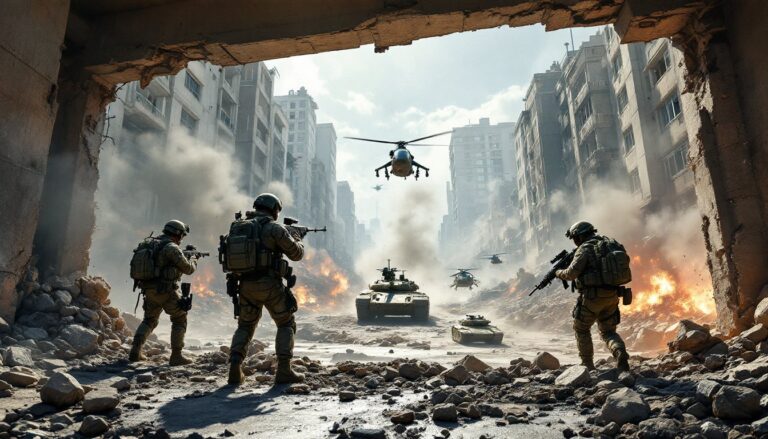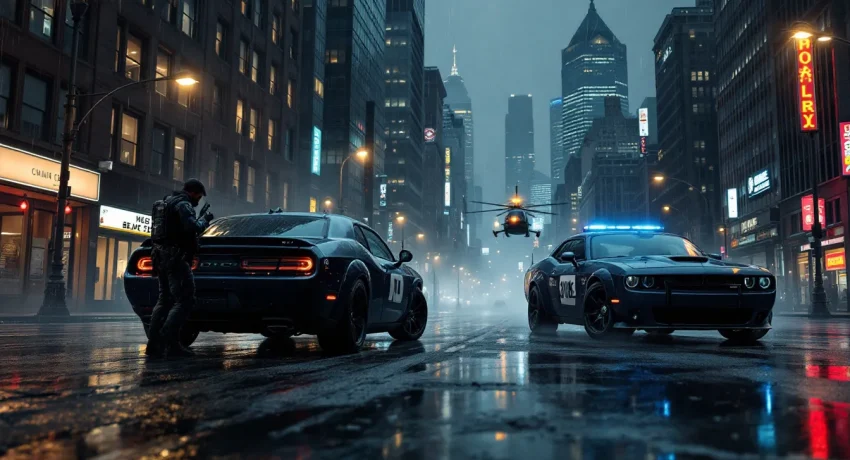

Battlefield Hardline threw a curveball at the franchise when it launched in March 2015. Instead of tanks rolling through mud and jets screaming overhead, players found themselves in the middle of a cops-and-robbers war with muscle cars, ziplines, and stacks of cash. Developed by Visceral Games (the Dead Space studio) rather than series mainstay DICE, Hardline swapped military conflicts for urban crime drama, and the shift wasn’t for everyone.
Nearly eleven years after release, Hardline occupies a strange place in the Battlefield legacy. Some players remember it fondly for its unique modes and fast-paced action. Others dismiss it as the franchise’s black sheep. But if you’re curious about this unconventional entry, or wondering whether it’s worth firing up in 2026, this guide breaks down everything from campaign stealth mechanics to multiplayer loadout optimization, active server status, and whether battlefield hardline pc still has a pulse.
Table of Contents
ToggleKey Takeaways
- Battlefield Hardline replaced traditional military gameplay with a cops-and-robbers crime theme, featuring unique modes like Heist and Blood Money that emphasize objective-focused teamwork over conventional Conquest mechanics.
- The campaign delivers one of the franchise’s strongest single-player experiences with stealth mechanics, episodic storytelling, and multiple tactical approaches across 10 episodes totaling 8-10 hours.
- Multiplayer success on Battlefield Hardline PC depends on strategic class selection, map knowledge, and communication—Mechanics dominate Hotwire, Operators sustain Heist defense, and Professionals lock down long sightlines in Rescue mode.
- As of 2026, Hardline’s player base remains small but stable, with 1-3 active servers on PC during peak hours (Friday-Saturday evenings), making it a niche experience for dedicated fans rather than casual players.
- The game’s faster time-to-kill and smaller, more vertical maps require snap accuracy and repositioning over prolonged engagements, rewarding high-risk, high-reward plays through ziplines, grappling hooks, and flanking routes.
- Hardline’s experimental departure from military formula produced a flawed gem—while criticized for feeling like a spin-off rather than a full Battlefield sequel, its innovative crime-themed gameplay has influenced modern objective-focused shooters.
What Is Battlefield Hardline?
Battlefield Hardline is a first-person shooter that reimagines the Battlefield formula through a law enforcement lens. Released on March 17, 2015, for PC, PlayStation 4, PlayStation 3, Xbox One, and Xbox 360, it ditched the military sandbox for urban crime warfare. Think heists, drug busts, and high-speed chases instead of conventional warfare.
The game runs on the Frostbite 3 engine, the same tech powering Battlefield 4, but applies it to city streets, banks, and dusty desert towns. Players choose between cops (Law Enforcement) and criminals (Thieves), battling across objective-based modes that emphasize speed and cash over ticket bleed and conquest flags.
The Premise: Shifting From Military to Law Enforcement
Hardline’s narrative follows Detective Nick Mendoza, an idealistic Miami cop who gets tangled in a sprawling conspiracy involving drug cartels, corrupt officers, and millions in dirty money. The campaign unfolds like a TV crime drama, complete with episode titles and “Previously On” recaps, pulling inspiration from shows like Miami Vice and Breaking Bad.
The shift to law enforcement affects tone more than mechanics. You’re still shooting people and blowing things up, but the context feels grounded. Bank vaults replace military installations. Suspects get arrested instead of eliminated. The criminals you chase drive souped-up sports cars, not armored transports.
This thematic departure divided the community. Battlefield purists wanted jets and tanks. Hardline offered motorcycles and taser guns.
How Hardline Differs From Traditional Battlefield Games
Hardline strips away some of Battlefield’s signature elements. There are no jets, bombers, or attack helicopters in the traditional sense. Vehicle combat focuses on sedans, SUVs, motorcycles, and choppers used for transport rather than air superiority.
Maps are smaller and more vertical than typical Battlefield fare. Urban environments encourage close-quarters engagements, rooftop sniping, and zipline flanks. Destruction is present but restrained, no leveling entire city blocks.
The ticket system works differently too. In modes like Heist and Blood Money, teams compete for cash rather than kills. Staying alive matters, but objective play trumps K/D ratio. This shifts the gameplay loop toward high-risk, high-reward plays rather than slow territorial grind.
Class roles got streamlined. The four classes, Operator, Mechanic, Enforcer, Professional, mirror Battlefield 4’s setup but with gadgets tailored to the crime theme. Defibrillators become “revive kits,” repair tools work on civilian vehicles, and grappling hooks replace ladders.
Combat pacing is faster. Time-to-kill (TTK) sits on the quicker side, rewarding snap accuracy and positioning over prolonged firefights. This makes Hardline feel twitchier than its predecessors, closer to Call of Duty than Battlefield 3.
Single-Player Campaign Overview
Hardline’s campaign is a rare bright spot in the franchise’s single-player history. While most Battlefield stories serve as glorified tutorials, Hardline delivers a cohesive narrative with replay value and branching choices.
Episode Structure and Storytelling
The campaign is split into 10 episodes, each running 30-60 minutes. Between episodes, you get “Previously On” recaps like a Netflix crime series. It’s a clever touch that reinforces the TV-show vibe Visceral was chasing.
Episodes range from undercover infiltration missions to explosive shootouts. One moment you’re sneaking through a marijuana grow operation: the next you’re defending a penthouse from waves of cartel enforcers. The pacing keeps things fresh, and the story builds momentum as Mendoza uncovers layers of corruption.
Dialogue leans into crime drama tropes, grizzled partners, double-crosses, moral grey areas, but the voice acting (especially Nick’s partner Khai Minh Dao, played by Kelly Hu) sells it. The plot won’t win awards, but it’s competent enough to keep you invested through the 8-10 hour runtime.
Key Characters and Plot Highlights
You play as Nick Mendoza, a by-the-book detective partnered with veteran cop Khai Minh Dao. Their investigation into a massive cocaine shipment exposes a conspiracy involving drug lord Preferred Outcomes and dirty cops within their own unit.
Without spoiling too much: trust gets betrayed, alliances shift, and Nick ends up framed and on the run. The story jumps three years forward midway through, raising the stakes as Nick seeks revenge and redemption.
Supporting characters like Captain Julian Dawes (Nick’s mentor-turned-antagonist) and criminal informant Tony Alpert add depth. The cast isn’t massive, but each character gets enough screen time to feel meaningful.
Stealth Mechanics and Tactical Gameplay
Here’s where Hardline’s campaign shines: stealth is viable and rewarding. You can flash your badge to freeze suspects, then cuff them for points and intel. Takedowns are silent, and you can scan enemies with a police scanner to identify high-value targets.
If you’re patient, you can clear entire sections without firing a shot. Non-lethal playthroughs earn bonus points, which unlock weapons and gadgets. The game doesn’t force stealth, going loud is always an option, but the systems are fleshed out enough to encourage experimentation.
Tactical gadgets like ziplines, grappling hooks, and tasers add variety. You can scope out enemy positions, plan entry points, and execute coordinated takedowns. It’s not as deep as Splinter Cell, but it’s miles ahead of Call of Duty’s “walk forward and shoot” approach.
Mission design supports multiple approaches. Bank heists, rooftop infiltrations, and desert shootouts each offer different paths and strategies. If you’re a fan of creative tactics, the campaign gives you room to experiment.
Multiplayer Modes and Gameplay
Multiplayer is where Hardline either clicks or crashes for most players. The mode lineup is unconventional, emphasizing objectives and teamwork over raw killstreaks.
Heist: The Signature Mode
Heist is Hardline’s calling card. Criminals break into a vault, grab two bags of cash, and extract them to a getaway vehicle. Cops defend the vault, then try to stop the extraction.
It’s asymmetric, high-stakes, and chaotic. A single skilled player can clutch a round by sprinting the cash to the chopper while teammates provide cover. Rounds are short (5-10 minutes), making it perfect for quick sessions.
Heist rewards communication and planning. Criminals need to coordinate breaches and cover fire. Cops must lock down choke points and predict extraction routes. When both teams are organized, Heist delivers some of the tensest moments in the franchise.
Blood Money: Cash Grab Chaos
Blood Money is Hardline’s take on Conquest, but instead of flags, teams fight over a central pile of cash. Players grab stacks, haul them back to their vault, and protect their stash from enemy raids.
It’s pure chaos. You can steal money from the enemy vault, creating back-and-forth momentum swings. A team leading by millions can lose if their vault gets emptied in a coordinated raid.
Blood Money favors aggressive players who can multitask, grabbing cash, defending carriers, and raiding enemy territory. Matches run longer than Heist (15-20 minutes), making it ideal for extended play sessions.
Hotwire: High-Speed Vehicular Combat
In Hotwire, teams capture and hold marked vehicles while driving above a certain speed. Think Conquest, but the flags are cars zipping around the map at 60 mph.
It’s ridiculous and glorious. Passengers lean out windows firing SMGs. Enforcers lay mines on highways. Mechanics repair vehicles mid-chase while dodging helicopter fire. The mode is pure adrenaline, fast, loud, and absurdly fun when the server is full.
Hotwire works best on open maps with long roads. Urban maps can feel cramped, turning vehicle combat into bumper cars. But when it clicks, it’s unlike anything else in the series.
Rescue and Crosshair: Tactical Elimination
Rescue is Hardline’s answer to Counter-Strike’s hostage mode. Cops extract hostages: criminals prevent it. No respawns, making every life precious. Rounds are tense, methodical, and heavily dependent on communication.
Crosshair flips the script. One player on each team is a VIP, cops protect theirs, criminals hunt theirs. First team to eliminate the enemy VIP five times wins. It’s fast, tactical, and rewards coordinated pushes.
Both modes cater to competitive players who prefer precision over chaos. They’re low-population on most servers in 2026, but when you find an active lobby, they deliver intense, memorable rounds.
Classes and Loadouts Breakdown
Hardline’s class system mirrors Battlefield 4 but tweaks gadgets and weapons to fit the crime theme. Mastering each class is essential for dominating matches.
Operator: The Healer and Support Class
The Operator is your medic. Primary gadget: Revive Kit (essentially a defibrillator). Secondary options include First Aid Packs for healing or Ammo Bags for resupply.
Operators use assault rifles, versatile weapons effective at most ranges. Popular picks include the M16A3 (high fire rate, manageable recoil) and AKM (hard-hitting, slower RPM).
This class is crucial in objective modes. Keeping teammates alive during a Heist extraction or Blood Money raid can swing rounds. Stick with your squad, prioritize revives, and don’t chase kills alone.
Mechanic: Vehicle Specialist and Engineer
The Mechanic repairs vehicles, deploys mines, and counters enemy transports. Primary gadget: Repair Tool. Secondary options: Sabotage (disables enemy vehicles), Laser Tripmine, or Satellite Phone (spawns a supply drop).
Mechanics carry SMGs and carbines, mobile, close-to-mid-range weapons. The K10 SMG (insane fire rate) and M/45 (balanced handling) dominate CQB.
In Hotwire, Mechanics are MVP. Repair vehicles mid-chase, lay mines on highways, and sabotage enemy cars. In other modes, use tripwires to lock down choke points and defend objectives.
Enforcer: Heavy Firepower and Destruction
The Enforcer is your explosive specialist. Primary gadget: Breaching Charge (C4 equivalent). Secondary options: Ballistic Shield (mobile cover), Ammo Box, or Tear Gas.
Enforcers wield battle rifles and shotguns, hard-hitting, slower-firing weapons. The HK51 (high DPS, heavy recoil) and 870P Magnum (one-shot potential up close) excel in their niches.
Enforcers shine in defensive and area-denial roles. Plant breaching charges on cash piles in Blood Money, use shields to push choke points in Heist, and tear gas to flush enemies from cover. The class trades mobility for raw stopping power.
Professional: Precision and Stealth
The Professional is Hardline’s sniper and recon class. Primary gadget: Camera (spots enemies). Secondary options: Laser Tripmine, Stealth Training (reduced detection range), or Decoy.
Professionals use sniper rifles and DMRs. The .300 Knockout (bolt-action, high damage) and SCAR-H (semi-auto, versatile) cover long and mid-range.
This class requires patience and positioning. Spot enemies with cameras, lock down sightlines, and protect cash carriers from rooftops. In modes like Rescue and Crosshair, a skilled Professional can lock down entire sections of the map.
Weapons, Vehicles, and Gadgets
Hardline’s arsenal blends police-issue hardware with black-market military gear. Progression unlocks weapons across all classes, giving players flexibility in loadouts.
Weapon Variety: From Police Sidearms to Military Hardware
Starting weapons are civilian and law enforcement models: M16A3, UMP-45, 870P shotgun. As you rank up, military-grade firepower unlocks, AKM, SCAR-H, HK51.
Weapon balance favors fast TTK. Most guns kill in 4-6 shots at close-to-mid range. Recoil is manageable with practice, but spray-and-pray gets punished. Tap-firing and burst control dominate medium-to-long engagements.
Sidearms aren’t afterthoughts. The .45 caliber pistols (like the 1911) pack serious punch, often two-shotting at close range. Players comfortable with quick-swapping can finish kills faster than reloading.
Attachments include suppressors, grips, scopes, and muzzle brakes. Suppressors hide you from the minimap but reduce damage range, critical in modes like Blood Money where stealth raids pay off.
Iconic Vehicles: Muscle Cars, Motorcycles, and Helicopters
Vehicles are Hardline’s personality. Forget tanks and APCs, here you’re driving muscle cars, sedans, motorcycles, and speedboats.
Fan-favorite rides include the Dodge Charger (cops), Chevrolet Camaro (criminals), and sport bikes (fast, fragile, perfect for flag-running in Hotwire). Helicopters are transport-focused, with door gunners providing suppressive fire.
Vehicle handling is arcade-style: responsive, forgiving, and built for speed. Drifting around corners while passengers spray SMG fire feels straight out of an action movie. Destruction is present, cars explode after enough damage, but they’re tougher than you’d expect.
Hotwire turns vehicles into moving objectives, making them indispensable. In other modes, they’re rapid transport and mobile cover. Skilled drivers can roadkill enemies, block choke points, or execute daring getaways with stolen cash.
Essential Gadgets for Tactical Advantage
Gadgets define Hardline’s tactical depth. Beyond class-specific tools, players can equip grenades, flashbangs, and molotovs.
Grappling Hooks let you scale buildings and access rooftops instantly. Ziplines create traversal routes for your team, essential for flanking and quick extractions.
Stun Guns (taser) are non-lethal takedown tools, mostly for campaign but available in specific multiplayer modes. Laser Tripmines are devastating in Blood Money, place them near your vault entrance and watch enemy raiders disintegrate.
Ammo and health crates are persistent AOE deployables. Drop them near objectives, and your team stays supplied during prolonged fights. In Rescue or Crosshair, a well-placed crate can turn a defensive position into an impenetrable fortress.
Tips and Strategies for Dominating Hardline
Hardline rewards smart play over raw aim. Here’s how to level up your game.
Mastering Movement and Map Knowledge
Movement is faster than mainline Battlefield. Sprint speed is high, and ziplines/grappling hooks let you reposition instantly. Learn vertical routes, rooftops and catwalks offer sightlines and escape paths most players ignore.
Map knowledge wins games. Memorize cash pile locations in Blood Money, vault breach points in Heist, and high-speed loops in Hotwire. Knowing where enemies spawn and rotate lets you prefire choke points and intercept objective runners.
Use destruction strategically. Frostbite 3 lets you blow out walls and create new sightlines. In Bank Job, breaching charges can open alternate routes into the vault. In Dust Bowl, collapsing cover forces enemies into the open.
Effective Team Communication and Coordination
Hardline’s modes demand teamwork. Solo players can pop off, but coordinated squads dominate. Use voice chat or at least spot enemies consistently (default: Q on PC, R1 on PlayStation, RB on Xbox).
Assign roles within your squad. One player grabs cash, three provide cover. In Heist, designate a carrier with a fast loadout (Mechanic with SMG) while Enforcers and Operators escort.
Flank aggressively. Hardline’s smaller maps reward repositioning. If your team is stuck at a choke point, take a zipline or grapple to a rooftop and hit enemies from an unexpected angle. According to reports from IGN, flanking strategies were key differentiators in competitive play.
Optimizing Your Loadout for Different Modes
No universal “best” loadout exists, adapt to the mode and map.
Heist (Criminals): Run Mechanic with K10 SMG, suppressor, and laser sight. Prioritize speed and close-range lethality. Equip grenades to flush cops from vault entrances.
Heist (Cops): Operator with M16A3, extended mags, and First Aid Pack. Hold defensive positions, revive teammates, and cut off extraction routes.
Blood Money: Enforcer with ballistic shield and breaching charges. Camp near cash piles, plant C4 on enemy vault entrances, and use the shield to push contested zones.
Hotwire: Mechanic with repair tool and carbine. Stick with marked vehicles, repair mid-chase, and deploy tripmines on popular routes.
Rescue/Crosshair: Professional with .300 Knockout and camera. Spot enemies, lock down long sightlines, and provide overwatch for your VIP.
Maps and Environments
Hardline launched with nine maps, later expanding via DLC to 16 total. Map design emphasizes urban verticality and close-quarters engagements.
Urban Battlegrounds: Downtown and Bank Job
Downtown is the quintessential Hardline map, a dense urban sprawl with skyscrapers, alleys, and rooftop helipads. Ziplines crisscross between buildings, rewarding players who master vertical movement. It’s excellent for Heist and Rescue, offering multiple breach points and extraction routes.
Bank Job centers on a multi-story bank vault. Tight corridors, destructible walls, and flanking staircases create intense CQB. Criminals breach from multiple angles: cops fortify choke points. The map shines in Heist and Blood Money, where every corner can hide an ambush.
Both maps showcase Hardline’s crime aesthetic, police tape, armored trucks, shattered glass. The urban density makes sniping viable but not dominant. Mid-range rifles and SMGs rule here.
Open Spaces: Dust Bowl and The Block
Dust Bowl shifts to desert trailer parks and meth labs. Wide-open sightlines favor snipers and DMRs. Vehicle play is essential, motorcycles and cars let you cover ground quickly and avoid being picked off crossing open ground.
Hotwire thrives on Dust Bowl. Long roads and minimal cover make vehicle chases intense. Professionals can lock down highways, but Mechanics with repair tools keep cars in play.
The Block is a Haitian neighborhood, narrow streets, two-story buildings, and limited vertical play. Close-quarters weapons dominate. Shotguns, SMGs, and battle rifles shine in the tight urban combat. The map works well for Blood Money and Crosshair, where mobility and positioning trump long-range accuracy.
DLC maps like Alcatraz (prison break theme) and Museum (artifact heist) add variety but remain low-population in 2026. Stick to base maps or rotation playlists if you want active servers on battlefield hardline pc.
Community and Player Base in 2026
Eleven years post-launch, Hardline’s community is small but dedicated. Expect limited servers and specific regional hotspots.
Is Hardline Still Active?
Barefoot honesty: the player count is low. On PC, you’ll find 1-3 active servers during peak hours (evenings in North America and Europe). PlayStation 4 and Xbox One have slightly better populations, with 3-5 servers regularly full.
Old-gen consoles (PS3, Xbox 360) are ghost towns. If you’re on those platforms, don’t bother.
The community that remains is passionate. Veterans who stuck with Hardline know the maps inside-out and communicate well. Expect skilled players who’ve optimized loadouts and movement. New players face a steep learning curve against seasoned squads.
Peak activity windows: Friday and Saturday evenings (7 PM – midnight local time). Weekdays see 1-2 active lobbies at most. According to player tracking from GameSpot, Hardline’s player count peaked at launch and dropped 70% within six months, but the remaining base has stayed surprisingly stable since 2020.
Where to Find Active Servers and Players
On battlefield hardline pc, use the in-game server browser and filter by:
- Region: North America or Europe (highest populations)
- Mode: Blood Money and Conquest have the most active servers. Heist pops occasionally. Hotwire, Rescue, and Crosshair are rare.
- Player count: Filter for 10+ players to avoid empty lobbies.
BattleLog (EA’s web-based server browser) still works for Hardline. It’s clunky but offers better filters than the in-game menu. Bookmark active servers and add regulars as friends, community-run Discord servers organize weekend events.
Console players can find communities on Reddit (r/BF_Hardline) and dedicated Discord channels. Weekend events sometimes fill 2-3 servers for coordinated play.
Don’t expect quick matchmaking. You’ll wait 5-10 minutes for a slot on popular servers. If you’re patient and flexible with modes, you can still get games. If you’re looking for instant queues and variety, Hardline isn’t it.
Critical Reception and Legacy
Hardline’s launch was rocky. Critics praised the campaign and unique modes but questioned whether the game justified a full-price release.
What Critics Said at Launch
Review scores clustered around 7/10, solid but not spectacular. GamesRadar+ highlighted the campaign’s stealth mechanics and episodic structure as standouts, calling it the best single-player Battlefield since Bad Company 2.
Multiplayer drew mixed reactions. Heist and Blood Money earned praise for originality, but smaller maps and faster TTK alienated Battlefield purists. Critics noted that Hardline felt closer to a large-scale Call of Duty than a true Battlefield game.
Technical issues plagued launch. Netcode problems, matchmaking errors, and progression bugs soured early adopters. EA and Visceral patched aggressively, but the damage to the player base was done. Within three months, populations dropped sharply.
The $60 price tag hurt. Many felt Hardline should’ve been a $30 expansion rather than a standalone title. Content at launch, nine maps, five primary modes, felt thin compared to Battlefield 4’s expansive offering.
How Hardline Fits Into the Battlefield Franchise
Hardline is the franchise’s oddball, a spin-off that dared to experiment and paid the price for deviating from formula. It sits outside the main numbered series (no “Battlefield 5” label), cementing its status as a one-off experiment.
Its legacy is mixed. Hardcore fans appreciate the attempt to innovate. The campaign proved Battlefield could do story-driven single-player well. Modes like Heist influenced future shooters, Rainbow Six Siege and Payday 2 share DNA with Hardline’s objective-focused design.
But Hardline didn’t spawn sequels. EA and DICE returned to military settings with Battlefield 1 (WWI) and Battlefield V (WWII), then Battlefield 2042 (near-future). The crime theme was shelved, likely forever.
In the franchise rankings, Hardline usually lands in the bottom half, not because it’s bad, but because it’s too different. Players seeking classic Battlefield skip it. Those willing to embrace the quirky crime angle find a flawed gem worth revisiting.
Should You Play Battlefield Hardline in 2026?
The answer depends on what you want.
Play Hardline if:
- You’re curious about Battlefield’s experimental side and enjoy unconventional settings.
- You want a solid single-player campaign with stealth mechanics and replayability.
- You’re okay with limited multiplayer populations and don’t mind waiting for servers.
- You enjoy objective-focused modes (Heist, Blood Money) more than traditional Conquest.
- You can grab it on sale, Hardline frequently drops to $5-$10 on Steam and EA Play.
Skip Hardline if:
- You want massive 64-player battles with jets, tanks, and Conquest maps.
- You need active matchmaking and variety in game modes.
- You’re on PS3 or Xbox 360 (servers are dead).
- You prefer slower TTK and tactical positioning over fast-twitch gunplay.
For newcomers to the series, Hardline isn’t the best entry point. Check out the top Battlefield games or a beginner’s guide to understand what makes the franchise tick before diving into the crime spin-off.
If you’ve played other Battlefield titles and want something different, Hardline offers a fresh, if flawed, experience. The campaign alone justifies a playthrough, and if you catch multiplayer on a good weekend, you’ll see glimpses of what Hardline could’ve been with a larger community.
On battlefield hardline pc, performance is solid on modern hardware. The game runs smoothly at 1080p/1440p on mid-range GPUs, and servers, while few, are generally stable. If you’re hunting for active matches, stick to Friday and Saturday evenings.
Conclusion
Battlefield Hardline swung for the fences and didn’t quite connect. It tried to reinvent the franchise with a crime-driven twist, delivering a standout campaign and creative multiplayer modes, but the smaller scale, niche theme, and technical issues at launch limited its audience.
Eleven years later, Hardline is a curiosity. The campaign still holds up, offering stealth-focused gameplay that few shooters nail. Multiplayer is alive but on life support, sustained by a small, dedicated community. If you can find a server, Heist and Blood Money deliver intense, objective-driven action that still feels unique.
Is it the best Battlefield? No. Is it worth experiencing? If you’re a franchise completionist or a fan of crime thrillers, absolutely. Just manage your expectations, this is a niche entry in a blockbuster series, and it wears that badge proudly.
Whether you’re a cop or a criminal, Hardline reminds us that sometimes the best risks are the ones no one asked for.