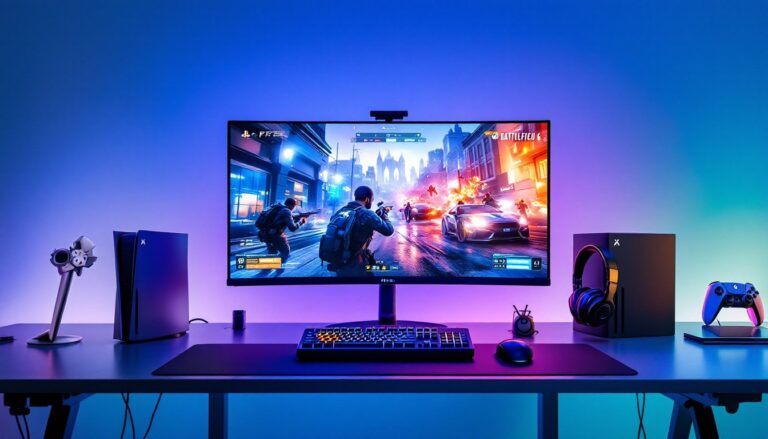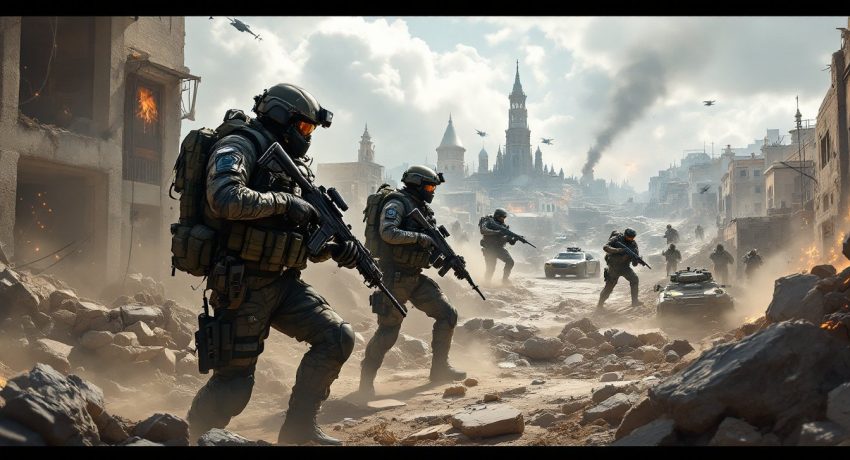

EA’s Battlefield franchise is making another push into the competitive military shooter space with Battlefield 2026, the studio’s latest entry in a series that’s defined large-scale multiplayer combat for nearly two decades. Whether you’re jumping in on PlayStation 5, PlayStation 4, Xbox Series X/S, or PC, there’s a lot to unpack about what this latest iteration brings to the table. The game builds on the foundation laid by recent entries while introducing meaningful innovations that veteran players and newcomers alike will notice immediately. If you’ve been sitting on the fence about whether to jump back into Battlefield or experience it for the first time, this guide breaks down everything you need to know.
Table of Contents
ToggleKey Takeaways
- Battlefield 2026 features large-scale 128-player multiplayer with destructible environments and vehicle combat that fundamentally distinguish it from smaller-arena competitors.
- The game supports cross-platform play and cross-progression across PlayStation, Xbox, and PC, allowing players to seamlessly squad up with friends and carry progress across all devices.
- Destructible environments dynamically reshape tactical gameplay by collapsing structures and eliminating cover, forcing constant adaptation throughout each match.
- The Specialist System provides meaningful customization flexibility by combining unique character abilities with unrestricted loadout choices, encouraging both specialization and experimentation.
- EA’s commitment to 7 additional maps in 2026, including Wake Island, plus regular balance updates and community feedback integration demonstrate serious long-term investment in Battlefield’s competitive future.
- Squad-based teamwork is rewarded without punishing solo players, making Battlefield 2026 accessible to casual friends groups while appealing to organized esports teams and ranked grinders.
What Is Battlefield 2026?
Battlefield 2026 is EA’s latest large-scale multiplayer first-person shooter designed for modern gaming platforms. It focuses on squad-based gameplay across massive maps with destructible environments, vehicle combat, and dynamic objectives that shift throughout a match. The game emphasizes teamwork over pure gunplay, solo players can still thrive, but coordinated squads dominate.
Unlike some competitors that lean into smaller, more intense arenas, Battlefield scales up to support 128 players on console and PC (though specific numbers vary by mode and platform). This design philosophy has always been the franchise’s core identity: more players, bigger maps, and more chaos.
The game launches on PlayStation 5, PlayStation 4, Xbox Series X/S, and PC, with cross-platform play enabled across all versions. Performance varies by hardware, with PS5 and Xbox Series X pushing higher frame rates and graphical fidelity than their last-gen counterparts. PC players typically see the highest ceilings for both performance and customization.
Key Features and Gameplay Innovations
Destruction and Environmental Destruction remain central to Battlefield’s identity. Structures collapse realistically, creating new cover and tactical opportunities mid-match. This isn’t just visual spectacle, it actively shapes how you approach objectives and rotations.
Specialist System returns with refinement. Instead of locked class archetypes, you pick a character with unique abilities (called “gadgets”) while retaining loadout flexibility. This hybrid approach gives players meaningful specialization without forcing rigid class restrictions. An assault-focused player might grab a medic’s healing tool, blurring traditional roles.
Dynamic Weather and Time of Day shift match conditions organically. Sandstorms reduce visibility, nighttime engagements feel claustrophobic, and rainfall affects vehicle handling. These aren’t cosmetic, they meaningfully impact strategy and weapon effectiveness.
Vehicle Combat has been rebalanced based on community feedback. Helicopters feel more vulnerable to coordinated infantry pushes, while tanks play a more supportive role rather than dominating entire sectors. The meta encourages vehicle teamplay rather than lone wolf piloting.
One of the more exciting additions is expanded naval warfare, with maps featuring boat gameplay, destroyer combat, and water-based objectives that create entirely new engagement zones.
Maps, Modes, and Multiplayer Experience
Battlefield 2026 launches with a solid map roster and has committed to expanding the pool significantly throughout 2026. The developers have confirmed that 7 additional maps are, addressing longtime player requests.
Core maps emphasize verticality and multiple engagement ranges. You’ll find sprawling urban environments suited for squad-based pushes, open desert areas favoring vehicle gameplay, and tight indoor sections for close-quarters combat. Map design encourages flanking routes and unexpected rotations, stale meta positions get punished.
Game Modes include the classic Conquest (control multiple objectives simultaneously), Rush (attackers push two objectives while defenders hold the line), and Breakthrough (asymmetrical objective-based mode with advancing front lines). New modes rotate seasonally, keeping matchmaking fresh without fragmenting the playerbase excessively.
Custom Lobbies are returning, enabling clans and competitive groups to practice without relying on ranked matchmaking. This is crucial for esports development and organized team play.
Spectator tools have been enhanced, making watching competitive streams and replays more engaging, a quality-of-life feature that impacts both casual entertainment and esports viewership.
Weapons, Customization, and Loadouts
The weapon sandbox includes familiar archetypes: assault rifles with balanced range, SMGs dominating close quarters, sniper rifles for one-shot positioning, and LMGs providing suppressive firepower. Every category feels viable in appropriate ranges, the Time-to-Kill (TTK) sits in a sweet spot where outplay potential exists without eliminating skilled aim advantage.
Weapon Customization is granular. Barrels, grips, optics, ammunition types, and muzzle attachments all affect handling, recoil, and effective range. Unlike some competitors that push toward homogenized attachments, Battlefield’s gunsmith rewards experimentation and knowledge of stat tradeoffs.
Loadout Flexibility means you’re not locked into preset classes. Pick a specialist, select your primary and secondary weapons, choose two gadgets (a weapon attachment and a tool like a grenade launcher or repair kit), and customize your perk setup. This hybrid system encourages adaptation without punishing specialization.
Pro players have been testing various Battlefield 6 competitive settings and gear recommendations to optimize their hardware configurations, providing useful baselines for aspiring competitors and grind-focused players looking to level up their setup.
Recently, Battlefield 6’s title update 1.2.2.5 brought significant balance changes, addressing weapon balance, visual issues, and matchmaking improvements, a sign that EA is actively monitoring the meta and responding to community feedback.
Cross-Platform Play and Progression
Cross-Platform Play is fully enabled: PlayStation 4 and 5 players compete together, Xbox One/Series X/S players are unified, and PC players match against console opponents (with some queue options available). This increases matchmaking speed and ensures you can squad up with friends regardless of their hardware.
Cross-Progression means your account, cosmetics, battle pass progress, and weapon unlocks sync across all platforms. You can play on PS5, then pick up your Xbox copy the same evening without starting over. This is industry standard now, but it’s worth highlighting given how many players split time across ecosystems.
Matchmaking prioritizes connection quality before applying skill-based ranking. Ping matters in a shooter, so you won’t get sent to a 150ms server just because skill algorithms demand it. Regional servers are distributed globally, supporting North America, Europe, Asia-Pacific, and other major regions.
Ranked Mode provides competitive queuing with visible rankings and seasonal rewards, separate from casual playlists. This structure appeals to grinding players while keeping casual matchmaking relaxed and approachable.
Why Battlefield Stands Out in the Competitive Shooter Market
The military shooter space is crowded. Call of Duty dominates esports viewership, Counter-Strike 2 rules competitive PC gaming, and Valorant owns tactical FPS mindshare. So what’s Battlefield’s lane?
Scale and Chaos. 128-player matches with destruction create unpredictable, organic moments that smaller-map games can’t replicate. A perfectly-timed grenade that collapses a building, forcing enemy repositioning, this is Battlefield’s signature appeal.
Vehicle Combat distinguishes it fundamentally. Helicopters, jets, tanks, and boats aren’t afterthoughts, they’re integral to match flow. No other mainstream shooter integrates vehicles this seamlessly.
Environmental Destruction isn’t just a visual effect: it dynamically reshapes tactical possibilities. Cover disappears, sightlines open, and familiar positions become untenable. This forces adaptability and punishes predictability harder than most competitors.
Squad-First Design rewards communication without punishing solo players. You can carry games alone, but organized squads multiply your impact exponentially. This appeals to both casual friend groups and esports organizations.
Content Roadmap Transparency shows EA listening to feedback. Committing to 7 additional maps, naval warfare expansions, and custom lobbies signals serious long-term investment. Players reward transparency with loyalty.
Conclusion
Battlefield 2026 delivers what the franchise does best: massive multiplayer environments where destruction, vehicles, and squad coordination create emergent gameplay moments. Whether you’re jumping in on PlayStation 5, PlayStation 4, Xbox, or PC, the core experience adapts well to your platform while maintaining consistent gameplay. The game respects both casual players grinding for cosmetics and competitive grinders pushing ranked rankings. With regular content updates confirmed through 2026 and a roadmap that acknowledges community priorities, Battlefield 2026 positions itself as a serious contender in the military shooter landscape. If large-scale chaos, vehicle combat, and destructible environments appeal to you, this is your game.