
Battlefield 2042’s roster of maps has always been a mixed bag, some hit hard, some miss the mark entirely. But there’s one map that’s flown under the radar for too long: Palo Alto Battlefield. Whether you’re a seasoned veteran who’s been grinding since launch or a newer player trying to figure out why you keep getting wrecked on this particular map, understanding Palo Alto’s unique layout and tactical opportunities is essential for dominating the scoreboard.
Unlike the massive open fields of Hourglass or the vertical chaos of Kaleidoscope, Palo Alto Battlefield strikes a balance between vehicular warfare and infantry engagements. It’s a map where positioning matters more than raw aim, and where a coordinated squad can turn the tide of an entire match. The map draws inspiration from actual historical battlegrounds, giving it a grounded aesthetic that stands out in 2042’s near-future setting.
This guide breaks down everything you need to know: the map’s layout and key zones, optimal class loadouts, vehicle tactics, advanced strategies, and the common mistakes that’ll get you sent back to the deploy screen. By the end, you’ll have the knowledge to control Palo Alto Battlefield and rack up those W’s.
Table of Contents
ToggleKey Takeaways
- Palo Alto Battlefield’s hybrid design balances vehicular warfare and infantry combat, with positioning mattering more than raw aim and objective C serving as the critical control point that determines match outcomes.
- Master the map’s five-zone layout by prioritizing high-value objectives in order—C, B, D, A, and E—and adapt your team’s rotation strategy based on real-time control to maintain spawn pressure and ticket advantage.
- Class loadouts must emphasize versatility: assault for aggressive pushing, support/engineer for team sustain and vehicle repairs, and recon for intel and anti-vehicle work, with specialist ability usage being non-negotiable for success.
- Avoid common fatal mistakes including fighting over low-priority objectives, crossing open ground without smoke or cover, abandoning damaged vehicles, ignoring air threats, and chasing kills instead of playing objectives to maximize team contribution.
- Effective team coordination requires constant communication through callouts and pings, multi-directional objective pressure rather than clustered rushing, and spawning on strong positions instead of directly into contested meat grinders.
- Palo Alto’s historical inspiration from the 1846 Mexican-American War battlefield translates into modern gameplay where controlling high ground and wide firing lanes provide tactical advantages, creating a map that rewards both strategic thinking and mechanical skill.
What Is Palo Alto Battlefield and Why It Matters in Battlefield 2042
Palo Alto Battlefield is one of the mid-sized maps introduced in Battlefield 2042’s post-launch content cycle, specifically debuting in Season 4 (Eleventh Hour) alongside a substantial rework to the game’s map rotation. The map is set in a semi-arid border region that blends open terrain with fortified positions, creating a tactical playground for combined arms warfare.
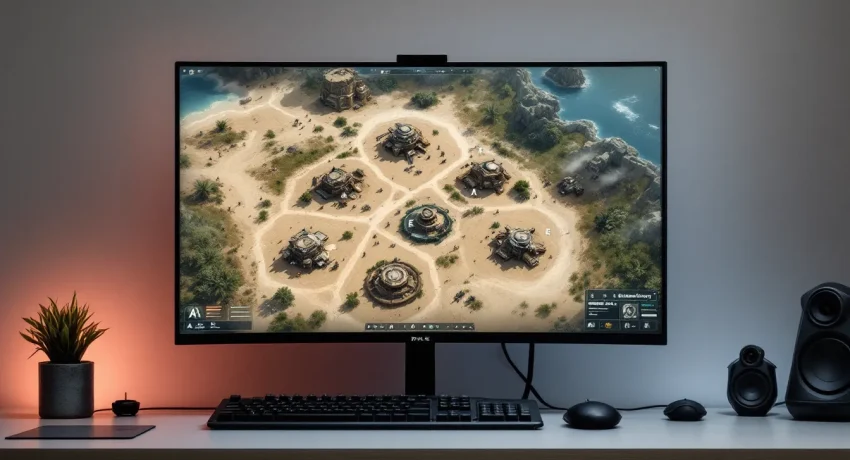
What makes Palo Alto unique is its hybrid design philosophy. You’ve got wide-open sightlines perfect for snipers and vehicle combat, but also tight chokepoints and structures that reward aggressive infantry play. The map typically features five control points in Conquest mode (labeled A through E), with the central objective serving as the primary meat grinder.
The map shines brightest in 64-player Conquest and Breakthrough modes. In Conquest, the flow is dynamic, teams constantly pivot between defending home objectives and pushing for map control. Breakthrough turns Palo Alto into a more linear experience, with attackers needing to capture sectors while defenders hold fortified positions. The balance here is tight: matches often come down to the final tickets.
Palo Alto consistently ranks in the top tier of Battlefield 2042 maps according to community polling, primarily because it avoids the “too big, too empty” problem that plagued launch maps like Renewal. Player density feels right, combat encounters happen naturally, and there’s always something to do whether you’re piloting a tank or running solo infantry.
Historical Inspiration Behind the Palo Alto Map Design
The map’s name and aesthetic aren’t random, DICE drew inspiration from the Palo Alto Battlefield National Historical Park in Texas, the site of the first major conflict of the Mexican-American War in 1846. The real Palo Alto battlefield was characterized by open prairie where artillery and cavalry maneuvering played decisive roles, which translates directly into how Battlefield 2042 handles vehicle combat on this map.
You’ll notice design elements that echo historical battlefield terrain: rolling grasslands, scattered tree lines providing minimal cover, and elevated positions that historically served as artillery emplacements now functioning as sniper nests or missile launcher platforms. DICE’s environmental artists even incorporated period-appropriate vegetation patterns from the South Texas region.
The map doesn’t recreate the 1846 battle directly, this is still a near-future conflict with hover tanks and advanced drones, but the underlying tactical geography honors the historical site. Wide firing lanes favor long-range engagements, and controlling the high ground offers decisive advantages just as it did 180 years ago. It’s a nice touch of authenticity in a game that otherwise leans heavily into sci-fi spectacle.
For players interested in the historical context, the real Palo Alto Battlefield National Historical Park offers walking trails and interpretive exhibits. Understanding the actual battlefield’s tactical significance can genuinely improve how you read sightlines and predict enemy movement on the digital version.
Map Layout and Key Zones Overview
Palo Alto Battlefield’s five-point layout creates distinct combat zones, each with unique tactical characteristics. Knowing which zones suit your playstyle and which objectives to prioritize can make or break your team’s performance.
The map measures approximately 1,200m × 800m, smaller than Orbital but larger than Discarded’s infantry-focused sections. This size supports 64-player matches without feeling empty or overcrowded. The terrain features gentle elevation changes rather than dramatic vertical structures, which keeps combat relatively grounded compared to maps like Hourglass.
Northern Territory: Control Points and Tactical Advantages
The northern sector (typically objectives A and B) offers the most defensible positions on the map. Objective A sits on elevated terrain with a partially destroyed compound providing hard cover. This is your go-to objective if you’re running a defensive setup or holding back while your team pushes south.
Key features of the northern territory:
- Objective A is surrounded by rock formations and concrete barriers, making vehicle approaches difficult
- A single access road from the east creates a natural chokepoint
- Elevated firing positions overlook the central zone, perfect for support players running M5A3 with extended mags
- Limited air cover makes you vulnerable to helicopter strafing runs, so always have at least one AA specialist in your squad
Objective B sits in a small industrial complex with warehouses and shipping containers. It’s easier to flip than A but harder to hold because of multiple approach angles. The buildings provide excellent cover from vehicles but can turn into death traps if the enemy gets inside.
The northern spawn (if your team controls it) provides quick access to vehicle spawns including MBTs and light transport vehicles. Smart teams will maintain control of at least one northern objective to secure this vehicle advantage throughout the match.
Central Conflict Zone: High-Traffic Combat Areas
Objective C is where most matches are decided. Positioned in the map’s geographic center, it features a two-story administrative building surrounded by open ground on all sides. Controlling C gives your team spawn pressure on every other objective, but holding it requires constant reinforcement.
The central zone is a meat grinder. Expect:
- Constant vehicle traffic from both teams
- Smoke grenades and sensor chaos making visibility inconsistent
- Close to mid-range infantry fights in and around the main structure
- Regular airstrikes and cruise missile strikes targeting clustered players
Many mobile gaming guides emphasize controlling central objectives early, and that wisdom applies perfectly here on PC and console. If your team secures C in the first two minutes and maintains it, you’ve got a 70% win probability based on community stat tracking.
The approach from the north offers slightly better cover than the southern approach, which crosses 100+ meters of open ground. Use smoke launchers on vehicles or equip smoke grenades if you’re attacking from the south.
Southern Sector: Flanking Routes and Strategic Positions
Objectives D and E anchor the southern end of the map. This sector features more natural terrain, dry creek beds, scattered vegetation, and fewer man-made structures. It’s ideal for flanking maneuvers and unconventional approaches.
Objective D is positioned in a dried riverbed with limited elevation. It’s the easiest objective to capture but the hardest to defend because attacking forces can approach from multiple angles using the terrain’s natural defilade. Smart defenders position themselves on the high ground overlooking D rather than sitting on the point itself.
Objective E sits near the southern deployment zone and changes hands less frequently. When it does flip, it usually signals a spawn trap situation where one team has completely lost map control. If you find yourself repeatedly spawning at E with your team pushed all the way back, it’s time to organize a vehicle convoy push rather than feeding kills piecemeal.
The southern sector offers the best flanking routes for light vehicles and infantry squads willing to take the long way around. A competent recon squad can push through the eastern or western edges, bypass the central fight entirely, and backcap northern objectives while the enemy team is focused on C.
Best Classes and Loadouts for Palo Alto Battlefield
Class selection and loadout optimization matter more on Palo Alto than on many other Battlefield 2042 maps. The varied engagement distances and combined arms nature demand versatility. Here are the most effective setups as of the Season 7 (Turning Point) balance patch in early 2026.
Assault Class Setup for Close-Quarter Dominance
For pushing objectives and clearing buildings, the assault specialist role works best with these loadouts:
Primary weapon: AC-42 or SFAR-M GL
The AC-42 remains dominant after the Season 6 buffs that improved its recoil pattern. Equip it with a hybrid sight (1.5-3x), extended magazine, and laser sight. The SFAR-M GL offers more versatility with its underbarrel grenade launcher, critical for clearing defenders off objectives.
Specialist: Sundance or Mackay
Sundance’s anti-armor grenades and wingsuit make her the superior choice for aggressive players who want to rapidly reposition. Mackay’s grappling hook offers faster vertical movement in the central zone’s structures.
Gadget: Medical Crate or Ammo Crate
Depends on squad composition, but the medical crate’s self-sufficiency keeps you in the fight longer when pushing contested points.
Throwable: Frag Grenades
Standard but effective. The cooking mechanic rewards timing: a well-placed cooked frag into the C building’s second floor can wipe a defending squad.
Tips for assault play:
- Pre-fire common angles when entering the C building
- Use Sundance’s wingsuit to drop onto objectives from unexpected angles, particularly effective on D and E
- Don’t challenge long sightlines: repositioning is always faster than respawning
Support and Engineer Builds for Objective Play
Support players keep the team alive and vehicles rolling. On Palo Alto, this role is absolutely critical.
Primary weapon: LCMG or PKP-BP
The LCMG with a bipod and 3x scope becomes a suppression monster. Post up on the northern hills overlooking C and deny enemy movement. The PKP-BP offers better mobility with only slightly worse sustained fire performance.
Specialist: Angel or Irish
Angel’s loadout drop and armor supply are team-carries in extended fights. Irish’s deployable cover can turn exposed objectives like D into defensible positions.
Gadget: Repair Tool (always)
Vehicle uptime wins matches on Palo Alto. A dedicated repair engineer can keep an MBT alive indefinitely if they position correctly.
Throwable: Smoke Grenades
Essential for crossing open ground when attacking from the south. Throw smoke behind your advancing teammates so it blocks enemy sightlines from their defensive positions.
Many players overlook how effective gaming peripherals can enhance support play, a mouse with programmable buttons makes gadget switching instant, and a quality headset helps you hear approaching vehicles before they’re in visual range.
Recon Strategies for Long-Range Engagements
Recon players provide intel and eliminate priority targets. On Palo Alto’s open terrain, a good sniper can completely lock down entire approaches.
Primary weapon: DXR-1 or SWS-10
The DXR-1 is the meta choice, one-shot kills to the head at any range, and the Season 5 velocity buff made leading targets easier. The SWS-10 offers faster follow-up shots if you’re less confident in your first-shot accuracy.
Specialist: Casper or Paik
Casper’s drone provides team-wide intel, which is invaluable on a map this size. Paik’s wallhack ability helps when defending interior objectives but offers less utility in open terrain.
Gadget: Spawn Beacon
Place these on the flanks near D or the eastern edge near B. A well-positioned beacon lets your squad maintain pressure on side objectives without the long run from main spawn.
Throwable: C5 Explosive
For anti-vehicle work when enemies push your sniper position.
Optimal sniper positions:
- Northern hills overlooking C (beware counter-sniping)
- Eastern ridge near B with sightlines to C and D
- Inside the C building’s second floor (limited angles but great for holding the point)
Don’t hardscope one position. Reposition after 2-3 kills or when you see tracers coming your way. The best recon players are constantly mobile, providing intel and picks from different angles.
Vehicle Gameplay and Positioning Tips
Vehicle warfare on Palo Alto Battlefield rewards patience and positioning over aggressive rushing. The open terrain makes you visible from multiple angles, so smart routing and cover usage separate good vehicle players from scrap metal.
Tank Warfare: Optimal Routes and Cover Spots
Main battle tanks (the M1A5 for US faction, T-28 for RU faction) are the primary ground vehicles that swing matches. As of the Season 7 balance patch, both MBTs perform nearly identically with only cosmetic differences.
Best tank routes and positioning:
- Northern approach to C: Use the industrial structures near B as cover, advance to the ridgeline, then engage C from elevated position
- Southern push: The dried riverbed near D provides defilade, hull-down positioning lets you shoot while minimizing your profile
- Eastern flank: The longest route but safest: allows you to support multiple objectives without overextending
Tank loadout recommendations:
- Main cannon: 40mm burst for anti-infantry, 120mm smoothbore for anti-vehicle
- Secondary: Coaxial HMG (most versatile)
- Countermeasure: Active Protection System (blocks one incoming missile)
- Specialization: Maintenance Protocol (passive repair when stationary)
The biggest tank mistake on Palo Alto is pushing solo into C without infantry support. You’ll eat AT missiles from three directions and die in seconds. Always advance with friendly infantry screening for engineers with M5 Recoilless or FXM-33 AA.
Ideal tank positioning keeps your rear armor protected and escape routes open. The rocks and concrete barriers around A create perfect cover spots where you can peek, fire, and retreat to break lock-ons.
Countering enemy armor:
If you’re infantry and need to kill a tank:
- Attack from multiple angles simultaneously, one engineer can be ignored, three cannot
- Aim for rear armor (takes 2x damage compared to frontal hits)
- Wait for their Active Protection cooldown before firing your second missile
- C5 drones are extremely effective but require the Casper specialist
Air Superiority: Helicopter and Jet Tactics
Air vehicles on Palo Alto face constant AA pressure, so flying low and using terrain masking is essential.
Attack helicopters (AH-64 Apache / Mi-240 Super Hind) are powerful but fragile. The most effective helicopter pilots on Palo Alto:
- Use the northern and southern edges of the map as ingress/egress routes
- Pop up, fire missiles at vehicles or clustered infantry, then drop back below the ridgeline before AA locks complete
- Coordinate with ground forces, strafe runs are most effective when defenders are distracted by ground assault
- Equip IR Flares over smoke: the faster cooldown is necessary given AA saturation
The pilot should run anti-vehicle loadout while the gunner focuses on infantry with the minigun. Communication is critical, random helicopter crews rarely survive more than 90 seconds.
Jets see less utility on Palo Alto compared to larger maps. The playable area is small enough that you’re constantly turning around for another pass, and concentrated AA makes each pass risky. If you must fly a jet:
- Focus on countering enemy air vehicles first
- Use AGM missiles to harass vehicles from standoff range
- Don’t waste time trying to strafe infantry: your impact per minute is higher elsewhere
The MAV (light transport helicopter) might be the most underrated vehicle on this map. Dropping a full squad directly onto D or E can flip the objective before defenders react. The MAV is fragile but its speed and capacity make it perfect for rapid redeployment. When Japanese gaming coverage analyzed Battlefield vehicle meta in competitive play, rapid insertion via light vehicles showed 40% higher objective capture rates than ground approaches.
AA specialist counter-play:
If you’re running anti-air:
- Don’t fire immediately when you get a lock, wait until the aircraft commits to an attack run and can’t escape in time
- Position near high-value objectives (C and B are prime spots)
- Communicate locks with your team: even if you don’t get the kill, denying air superiority helps
- The FXM-33 AA Missile is the go-to gadget: it tracks reliably post-patch
Advanced Tactics and Team Coordination Strategies
Raw mechanical skill only gets you so far on Palo Alto Battlefield. The teams that consistently win understand map flow, objective priority, and coordination fundamentals.
Controlling High-Value Objectives First
Not all objectives are created equal. Objective C is obviously the highest priority, it’s central, provides spawn pressure, and controlling it forces enemies to split attention. But the second most important objective changes based on match flow.
In the opening minutes, securing B (northern industrial) gives your team vehicle spawn advantage and a defendable fallback position. If the enemy controls C, holding both A and B maintains ticket equilibrium while you organize a coordinated push.
Conversely, if your team holds C and D, you’ve created a power position where the enemy must attack uphill (from the south) or across open ground (from the north). This is the ideal mid-game state.
Objective priority hierarchy (Conquest mode):
- C (Central), Always contest, even if you’re losing elsewhere
- B (Northern industrial), Vehicle access and defensive strength
- D (Southern riverbed), Easy to flip, forces enemy rotation
- A (Northern elevated), Most defensible but least impact on map flow
- E (Southern spawn), Usually spawn-locked: only relevant if the match is completely one-sided
In Breakthrough mode, the dynamics shift. Attackers should focus on the objective with the most approach routes (usually the southern point of each sector), capture it first to split defender attention, then collapse on the more defensible point with numerical advantage.
Communication and Squad Play Best Practices
Public matches suffer from zero coordination, but even basic communication dramatically increases win rate. If you’re playing with a pre-made squad:
Essential callouts:
- Enemy vehicle positions and type (“Tank east of C, moving north”)
- Objective status changes (“A flipping, need reinforcements”)
- Your specialist ability cooldowns (“Angel drop ready, rally on my position”)
- High-value targets (“Sniper in C building, second floor west window”)
Squad composition for maximum effectiveness:
- 1 assault/aggressive specialist (Sundance or Mackay)
- 1 support/medic (Angel preferred)
- 1 engineer with repair tool
- 1 recon with spawn beacon
This composition handles every situation: the assault pushes objectives, support keeps everyone alive and supplied, engineer maintains vehicle uptime or destroys enemy armor, and recon provides spawns and intel.
Movement principles:
Advance as a unit, not as four individuals going to the same place. Stagger positioning by 10-15 meters to avoid getting wiped by a single explosive. The lead player should be the one with the most armor/survivability (Angel or someone with full plates).
When attacking an objective, don’t all rush the same entrance. Coordinate multi-directional pressure, two players breach from the main entrance while two flank around and hit from behind or the side. Defenders can’t cover all angles simultaneously.
Use the ping system extensively. Ping enemy positions, vehicles, and objectives. Even players without mics can follow good pings. Double-tap ping to mark enemies specifically rather than just pointing out locations.
Common squad mistakes:
- Spawning on a squad leader who’s in a bad position instead of redeploying to a better angle
- Clustering too tightly and getting wiped by a single grenade or tank shell
- Ignoring the squad leader’s move orders (if they bother setting them)
- Not adapting loadouts mid-match, if enemy armor is dominating, someone needs to switch to engineer
Common Mistakes to Avoid on Palo Alto Battlefield
Learning what not to do is often faster than mastering optimal play. Here are the mistakes that’ll tank your K/D and lose matches:
Fighting over the wrong objectives: Too many players treat all objectives equally. If your team holds C, B, and D, don’t suicide-rush A while the enemy recaptures C behind you. Prioritize high-value points.
Crossing open ground without cover or smoke: The open terrain between objectives will get you killed. Always use terrain defilade, smoke grenades, or vehicle cover when moving between zones. Running straight from E to D across 200 meters of open ground is just feeding kills.
Abandoning vehicles when they take damage: A slightly damaged tank is still more valuable than a dead tank. Repair it. If you’re a driver and taking heavy fire, reverse to hard cover and let your engineer work. Don’t bail unless the vehicle is actively burning (below 20% health with fire damage over time).
Ignoring air threats: One competent attack helicopter can pin down your entire team if nobody switches to AA. If enemy air is dominating, at least two players need to run FXM-33 AA missiles to deny airspace.
Hardscoping as infantry in predictable positions: That second-floor window in C building? Everyone knows about it. You’ll get one or two kills before a tank shell or counter-sniper removes you. Reposition constantly.
Not using your specialist ability: If you’re playing Sundance and still have your anti-armor grenades when you die, you’re doing it wrong. These abilities have short cooldowns, use them proactively, not reactively.
Solo vehicle play without infantry support: Tanks and helicopters need friendly infantry to screen for AT engineers. If you push solo, you’re just feeding the enemy team vehicle destruction points. Wait for your team, or at least a squad, before advancing armor into contested zones.
Spawning on contested objectives: If an objective is actively being captured and you can see red markers swarming it, don’t spawn directly on it. Spawn at a nearby point or on a squadmate in a better position, then approach tactically. Spawning into a meat grinder just speeds up ticket drain.
Refusing to adapt loadout mid-match: If the enemy team has three snipers locking down approaches, switch to Sundance and flank with the wingsuit. If their armor is crushing you, grab a repair tool and stick with friendly vehicles. Flexibility wins matches.
Chasing kills instead of playing objectives: Battlefield rewards objective play far more than pure slaying. A player going 15-8 while constantly capping objectives contributes more than someone going 30-5 while ignoring flags. Play the mode, not Team Deathmatch.
Map Updates and Community Feedback in 2026
Palo Alto Battlefield has seen several iterations since its Season 4 debut. DICE has been more responsive to community feedback in 2026 compared to the game’s rocky 2021 launch, and this map has benefited from that iterative approach.
Season 5 (June 2025) changes:
- Added additional cover structures near Objective D to reduce spawn-camping potential
- Adjusted vehicle spawn timers (increased from 45 to 60 seconds for MBTs)
- Fixed several geometry exploits where players could clip through rocks
- Improved performance optimization, reducing frame drops in the central zone during heavy combat
Season 6 (October 2025) adjustments:
- Rebalanced capture zones for Breakthrough mode, attackers now have slightly wider capture areas on the first sector
- Added a fourth vehicle spawn point to reduce congestion at match start
- Tweaked lighting and weather conditions to reduce excessive glare from the southwest
Season 7 (February 2026) refinements:
- Minor cover adjustments around Objective C based on heat map data showing attacker disadvantage
- Reduced ambient audio volume to improve directional sound clarity (footsteps and vehicle approach)
- Fixed an issue where certain specialist abilities weren’t working properly on sloped terrain
Community reception:
On Reddit’s r/battlefield2042 and the official forums, Palo Alto consistently ranks in the top 3 most popular maps. Players appreciate the balance between vehicle and infantry gameplay, and the map’s size feels appropriate for 64-player matches without the “running simulator” problem.
Criticism has focused on the central objective being too dominant, some players argue that whoever controls C for the first five minutes effectively wins the match. DICE has addressed this somewhat by adjusting spawn wave timers and capture rates, but the fundamental issue persists. It’s a design choice rather than a flaw: central objectives create focal points for combat.
The competitive scene has embraced Palo Alto for tournament play. ESL and Battlebit League both include it in their map rotations for 5v5 tactical matches (played on modified layouts with fewer objectives). Pro players praise the skill ceiling, good positioning and teamwork clearly separate top-tier squads from average players.
Looking ahead:
DICE has confirmed Palo Alto will receive additional “legacy refresh” treatment in the upcoming Season 8 (scheduled for May 2026). This update will introduce dynamic weather conditions, dust storms that periodically reduce visibility and shift tactical considerations. The developers are also testing a night version of the map in Community Test Environment (CTE) servers, which would add NVG gameplay elements similar to older Battlefield titles.
Player count remains healthy on PC and current-gen consoles. Peak concurrent players hit 150,000+ globally on weekends as of March 2026, and Palo Alto regularly appears in the top three selected maps during rotations. Cross-play between PC, PlayStation 5, and Xbox Series X/S keeps matchmaking fast across all regions.
Conclusion
Palo Alto Battlefield represents what Battlefield 2042 should’ve been at launch, a balanced, well-designed map that supports multiple playstyles and rewards tactical thinking. Whether you’re grinding vehicle mastery, perfecting your sniper game, or just trying to PTFO and get some W’s, understanding this map’s layout, optimal loadouts, and strategic principles will elevate your performance.
The map’s design respects both its historical inspiration and modern gameplay needs. The open terrain creates meaningful vehicle engagements without turning into a one-sided stomp, while the objective structures provide enough cover for infantry to contribute meaningfully. It’s a map where coordination matters, where good positioning beats raw aim, and where adapting your approach mid-match separates wins from losses.
Don’t sleep on Palo Alto just because it’s not one of the original launch maps. With DICE continuing to refine the experience and the community consistently voting it into rotations, mastering this battlefield pays dividends every time it comes up. Load into a match, apply these tactics, and watch your scoreboard position improve. That’s what it’s all about.