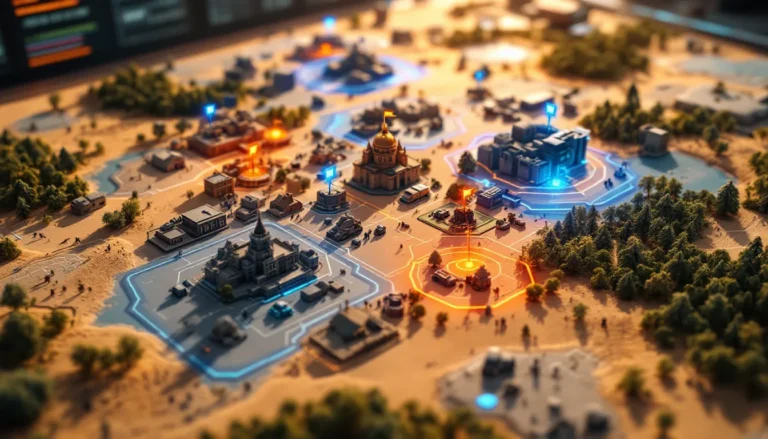
Honey Springs Battlefield doesn’t get the spotlight it deserves in the Battlefield community. While most players grind out the same rotation of metro tunnels and desert sprawls, this historically-inspired map offers something different: a blend of open-field chaos and tactical chokepoints that rewards smart positioning over pure twitch aim. If you’ve been steamrolled here or just want to turn your K/D around, you’re in the right place. This guide breaks down everything from spawn locations and capture zone priority to loadout optimization and squad tactics that actually work. Whether you’re a Battlefield veteran looking to refine your approach or a new player trying to figure out why you keep getting sniped from the tree line, we’ve got the specifics you need.
Table of Contents
ToggleKey Takeaways
- Honey Springs Battlefield rewards tactical positioning and squad coordination over raw mechanical skill, with its asymmetrical design and mixed terrain requiring smart rotations and cover usage.
- Control flag C as the central bleed point, but defend from outside the cap radius rather than on the objective itself to avoid the kill zone and execute effective counter-pushes.
- Smoke grenades, spawn beacons placed 20-30 meters away from flags, and coordinated squad movement through the northern woods or creek bed enable flag captures and map pressure.
- Vehicle threats demand immediate team attention—dedicate AT loadouts to deny enemy armor, and avoid wasting tank spawns on solo pushes that leave your team without armor for a full minute.
- Common mistakes like solo capping, sprinting across the open prairie without cover, and ignoring vehicles will consistently result in losses; instead, use terrain, communicate with pings, and hold advantageous flag combinations like A, B, and C.
What Is Honey Springs Battlefield and Why Does It Matter to Gamers?
The Historical Background of Honey Springs
Honey Springs Battlefield takes its name from the largest Civil War engagement in Indian Territory, fought on July 17, 1863, near present-day Oklahoma. The actual battle involved Union and Confederate forces clashing over control of supply routes, with difficult terrain and poor weather playing major tactical roles. While most gamers won’t care about the nitty-gritty historical details, understanding that this was a fight defined by positioning and supply control gives you context for why the map plays the way it does.
The real battlefield featured dense woodland, open prairie, and a critical creek crossing that became a bloodbath. DICE translated these elements into Battlefield’s sandbox style, creating a map that punishes reckless sprinting and rewards players who use cover intelligently.
How Honey Springs Appears in Battlefield Games
Honey Springs debuted as a mid-sized Conquest map in Battlefield’s historical DLC lineup, supporting 64-player matches on PC, PS5, and Xbox Series X
|
S. It’s built for combined arms warfare, mixing infantry-focused capture zones with open lanes for vehicle play. The map layout forces constant rotation, camping one flag all match gets you flanked and steamrolled.
What sets Honey Springs apart is its asymmetrical design. Unlike perfectly mirrored maps where both teams get identical spawn advantages, Honey Springs gives each side different strengths. The Union spawn (north side) has better access to wooded cover and elevated positions, while the Confederate spawn (south) gets faster vehicle rotations and open sightlines for armor play. This asymmetry makes every round feel different depending on which team you’re assigned to, and it’s why generic strategies fall apart here.
Key Features of the Honey Springs Battlefield Map
Terrain and Strategic Positioning
The map divides into three distinct terrain zones. The northern woodlands offer dense tree cover and elevation changes perfect for ambush plays and flanking routes. Mid-range engagements dominate here, your assault rifle or DMR will get more work than a sniper rifle because sightlines rarely extend past 100 meters.
The central prairie is where most players die. It’s open ground with minimal cover, dotted by a few burnt-out wagons and low stone walls. Crossing this area without smoke grenades or vehicle support is asking to get farmed by MGs and snipers. The creek running through the center provides the only natural cover, but it’s a deathtrap during heavy fighting.
The southern fields transition into rolling hills with scattered trees. Tanks and IFVs thrive here because they can use terrain masking to avoid AT fire while still having clean shots at infantry. If your team controls the southern flags and has competent armor players, you can absolutely strangle the enemy team’s ability to push.
Control Points and Capture Zones
Honey Springs runs five flags in standard Conquest: A (Cabin), B (Creek Crossing), C (Central Command), D (Supply Depot), and E (Southern Ridge).
Flag C is the bleed point. Holding it plus one other flag puts the enemy team in ticket drain mode. It’s positioned in the most exposed area of the map, making it a constant meatgrinder. Don’t solo cap C, you’ll get flanked from three directions and your respawn timer isn’t worth it.
Flags A and E are your safe spawns, harder to contest but also lower strategic value. New players tend to overcrowd these flags while the rest of the map burns. If you see 12 teammates camping A with no enemies in sight, you’re probably losing.
Flags B and D are where matches get decided. B (Creek Crossing) controls north-south movement and offers the best infantry cover on the map. D (Supply Depot) spawns vehicle repairs and ammo crates, making it critical for sustaining armor pushes.
Vehicle Spawns and Equipment Locations
Each team gets one medium tank, one light vehicle (jeep or ATV), and one transport helicopter at main base. Two additional light armor spawns appear at D flag when captured, usually an IFV and a recon vehicle.
The tank spawn timers sit at 60 seconds, so wasting armor on a suicide push hurts your team for the full minute it takes to respawn. If you’re not a confident tanker, let someone else take it.
Static weapon emplacements appear at B, C, and D flags: two .50 cal MGs and one TOW launcher. The TOW at D flag covers the southern approach and can oneshot careless tanks. Smart armor players destroy these emplacements first before pushing.
Ammo and health stations sit near each flag, but they’re destructible. Engineers running around with repair tools can rebuild them, which most players forget exists.
Best Strategies for Dominating Honey Springs Battlefield
Offensive Tactics for Breaking Enemy Lines
The fastest way to break a stalemate is coordinated smoke spam across the central prairie. Have your squad’s support players drop smoke grenades in a line from your flag to the contested objective, then push as a unit. Most defenders position for long sightlines, smoke forces them into close quarters where numbers win.
Flanking through the northern woods works if the enemy team is fixated on C flag. Use the tree cover to loop behind B or D, then spawn-beacon your squad into their backfield. Once you’ve got a squad beacon 20 meters behind enemy lines, you can pressure two flags simultaneously and force them to split focus.
Vehicle pushes need infantry support or they die fast. If you’re running armor, wait for your team to engage, then roll in from an unexpected angle. The worst tank players drive straight down the main road into a crossfire of AT rockets. The best ones use terrain to appear where the enemy’s AT players aren’t looking.
Defensive Strategies to Hold Key Positions
Defending B flag (Creek Crossing) comes down to controlling the northern tree line. Position two players with LMGs or DMRs watching the approaches from A and C. Their job isn’t to get kills, it’s to call out enemy movement and suppress pushes long enough for the rest of the squad to rotate.
When defending C flag, don’t sit on the point itself. It’s a kill zone. Instead, set up 30-50 meters outside the cap radius in covered positions. Let enemies start the capture, then pincer them from two directions. This keeps you off the minimap and makes counter-pushes way harder to execute.
Mines are underused on this map. Engineers should drop AT mines on the main vehicle routes south of D flag and AP mines inside buildings at B and C. A well-placed mine field can shut down an entire lane without you even being present.
Squad Coordination and Team Communication
The squad spawn beacon is the most important gadget on this map, full stop. Place it in cover near contested flags, not on the flag itself where it gets instantly destroyed, but 20-30 meters away in a bush or inside a building.
Use the request order function aggressively. If your squad leader isn’t marking objectives, request orders three times to trigger leadership transfer. A squad without objectives earns zero bonus points and might as well be four solo players.
Ping enemy vehicles immediately. One person spotting a tank benefits the entire team, someone across the map with a better angle might have the AT shot you don’t. The spotting system exists for a reason: use it.
Optimal Class Loadouts for Honey Springs Combat
Assault Class Setup and Weapon Recommendations
For Honey Springs, you want a mid-range assault rifle with controllable recoil. The STG-44 or M416 (depending on which Battlefield title you’re playing) handles the 50-100 meter engagements that dominate this map. Avoid SMGs unless you plan to never leave B flag’s interior spaces, the open areas will get you killed.
Gadget loadout: Take anti-tank rockets (SMAW or RPG-7) and medic crate or grenade launcher. AT capability is non-negotiable because enemy armor will farm your team if left unchecked. The medic crate lets you self-sustain during longer holds, while the grenade launcher gives you building-clear potential at B and D.
Grenade choice: Smoke over frag, every time. One smoke grenade enabling a flag cap is worth more than three random frag kills.
Support and Medic Class Configurations
Support players should run ammo crate and C4 or Claymores. Your job is keeping the team supplied and denying enemy vehicle pushes. The M249 SAW or PKM with a bipod turns you into a suppression machine on the central prairie, find a position with a good sightline, go prone, and make the enemy regret crossing open ground.
Medic class becomes crucial in breakthrough attempts. Equip the smoke grenade launcher (not normal grenades), defibrillator, and medic crate. Your weapon matters less than your gadgets here. A medic keeping five teammates alive through a push wins more matches than a medic chasing kills.
Pro tip: Drop your crate in hard cover behind your squad, not in the middle of the firefight where it gets destroyed in 10 seconds.
Recon and Sniper Positioning Tips
If you’re going to snipe on Honey Springs, earn your keep with spawn beacons and motion sensors. Plant the beacon in the northern woods near B flag or on the ridge overlooking D. Motion sensors placed at choke points give your entire team wallhacks in a 25-meter radius.
Sniper positions: The ridge east of E flag gives you clean shots into C and D but exposes you to counter-sniping. The burnt barn north of B offers elevation and multiple firing angles with a fast escape route. Don’t snipe from your spawn, it’s useless and your team needs bodies on objectives.
Weapon-wise, the SRR-61 or M40A5 handles the ranges you’ll encounter. Anything requiring more than 200-meter shots means you’re positioned wrong for this map’s flow. Players familiar with community weapon mods on PC might have access to custom scopes and ballistics tweaks, but stock configurations work fine if you understand bullet drop.
Avoid the aggressive recon playstyle unless you’re in a coordinated squad. Running a carbine or DMR as recon can work for beacon placement, but you sacrifice the long-range overwatch that actually helps your team break defensive positions.
Common Mistakes Players Make on Honey Springs Battlefield
Mistake #1: Sprinting across the central prairie without cover. You’re not going to outrun a bullet. Use smoke, go prone and crawl, or take the long route through cover. The five seconds you save isn’t worth a 10-second respawn timer.
Mistake #2: Ignoring vehicle threats. That enemy tank isn’t someone else’s problem, it’s everyone’s problem. If you have AT capability and you’re not at least pressuring enemy armor, you’re partially responsible when it goes 30-2.
Mistake #3: Solo capping contested flags. Capping alone puts a giant marker on the map that says “free kill here.” Wait for at least one squadmate or accept that you’re probably going to trade your life for 10 seconds of cap time.
Mistake #4: Over-rotating to the wrong flag. If your team holds A, B, and C, don’t push E. You’re spreading out for no reason and making it easier for the enemy to concentrate force and break your line. Hold what you’ve got and farm tickets.
Mistake #5: Not using the terrain. This map has elevation changes, defilade positions, and natural cover everywhere. If you’re standing in the open, you’re doing it wrong. Every engagement should start with you asking “where’s my cover if this goes badly?”
Mistake #6: Wasting vehicle spawns. Taking the tank, driving it straight into three AT engineers, and exploding in 15 seconds doesn’t just kill you, it deprives your team of armor for the next minute. If you’re learning vehicles, do it in an empty server or less critical matches.
Advanced Tips and Hidden Secrets
Easter Eggs and Hidden Areas
There’s a hidden dog tag inside the burnt cabin at A flag, tucked in the collapsed fireplace. Interact with it to unlock the “Honey Springs Historian” tag. It’s pure cosmetic, but completionists will want it.
The destroyed wagon southwest of C flag has a rare ammo crate spawn that most players miss. It’s partially buried in debris, approach from the south side and look for the interact prompt.
In the northern woods between A and B, there’s a fallen log you can go prone under that provides complete concealment from above. It’s perfect for ambush plays or waiting out a vehicle sweep. The log is roughly 40 meters northeast of B flag, identifiable by the moss covering and nearby boulder.
Pro Player Tactics and Movement Routes
Competitive teams running Honey Springs use a two-squad split: one squad pressures B and C while the other runs dedicated vehicle denial. The vehicle denial squad equips full AT loadouts and hunts enemy armor relentlessly, forcing them back to spawn and neutering their map control.
The creek bed rush is a high-risk, high-reward play. If your team spawns south, you can sprint through the creek from spawn to B flag in about 35 seconds, using the depression for cover. It only works in the first 60 seconds of the match before defenders set up, but it can secure B before the enemy even arrives.
Advanced flanking route: From the northern spawn, there’s a gully running east along the map boundary that lets you flank all the way to D flag while staying completely invisible to anyone not actively watching the edge of the playable area. It takes two minutes to traverse but drops you behind the entire enemy team.
Vehicle bait tactic: Have one engineer fire an AT rocket at enemy armor, then retreat into a building or heavy cover. When the tank pushes to finish the kill, two more engineers are waiting with rockets from perpendicular angles. Tanks can only face one direction, exploit that.
Rotation timing: Flags take 20 seconds to neutralize and another 20 to capture when contested. If you see a flag turning red on the map, you have roughly 25-30 seconds to get a defender there before it flips. Learn the sprint times between flags so you know when a save is possible versus when you should cut your losses.
How Honey Springs Compares to Other Battlefield Maps
Honey Springs sits in the same category as Panzerstorm and Kursk, vehicle-friendly maps with enough infantry play to stay interesting. Unlike pure infantry grinders like Operation Metro or Locker, you actually need to understand combined arms to succeed here.
Compared to Panzerstorm, Honey Springs offers better infantry cover and more varied terrain. Panzerstorm can devolve into tank-only gameplay where infantry barely matters. Honey Springs keeps infantry relevant through the wooded sections and building-based capture points.
Against Arras or Provence, Honey Springs feels larger and more vehicle-focused. Those maps let you play entire rounds as infantry without ever worrying about tanks. On Honey Springs, ignoring vehicles means you lose.
The asymmetrical design puts it closer to Wake Island than symmetrical maps like Caspian Border. Each side gets different advantages, which keeps the meta from getting stale. You can’t run the exact same strategy every round and expect it to work.
In terms of player count, Honey Springs works best at 64 players. Drop it to 32 and the map feels empty with too much downtime between engagements. The pacing is designed for constant pressure from multiple directions, which requires bodies on the map.
Conclusion
Honey Springs Battlefield rewards smart play over raw mechanical skill. Understanding the terrain, coordinating with your squad, and adapting your loadout to the situation will carry you further than godlike aim. The map punishes solo heroics and rewards teams that communicate, rotate intelligently, and leverage combined arms.
If you’ve been struggling here, start with the basics: pick the right class for your position, use smoke when crossing open ground, and don’t waste vehicle spawns. From there, work on advanced tactics like spawn beacon placement, flanking routes, and vehicle denial strategies. Master those fundamentals and you’ll outperform players with better stats but worse game sense.
The meta on Honey Springs hasn’t shifted much since launch, but always check patch notes for weapon balance changes and vehicle adjustments. What works in 2026 might need tweaking if DICE drops a major balance update. Until then, these strategies hold up across platforms and skill levels.