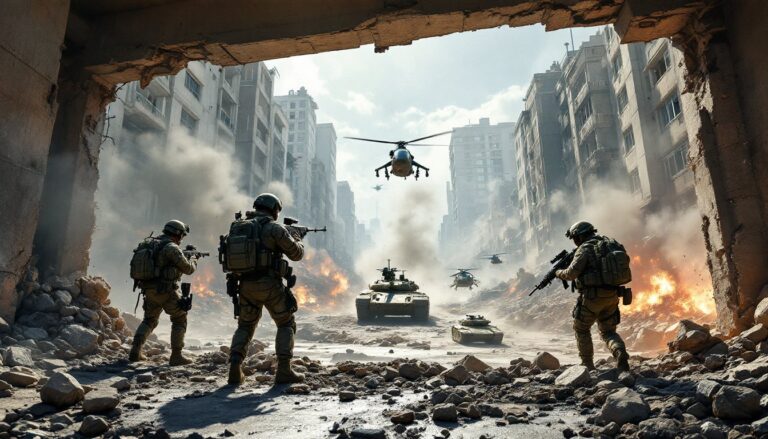

Ford Manassas has become one of the most contested maps in Battlefield’s current rotation, and for good reason. The mix of open terrain, chokepoints, and vehicle-heavy gameplay creates a tactical sandbox where coordinated teams thrive and lone wolves get punished hard. Whether you’re dropping into Conquest or Breakthrough, understanding this map’s nuances separates the players who cap objectives from those who spend the match at the respawn screen.
This guide breaks down everything players need to dominate Ford Manassas in 2026. From optimal class loadouts to vehicle positioning and team coordination, the strategies covered here reflect the current meta following the Season 4 balance changes. Let’s get into it.
Table of Contents
ToggleKey Takeaways
- Battlefield Ford Manassas success depends on map understanding, squad coordination, and adapting loadouts to specific objective locations rather than relying solely on mechanical gunplay.
- Control the Stone Bridge at objective C and one adjacent objective in the opening minutes to establish ticket dominance and force enemies into disadvantageous attacking positions.
- Spawn beacon placement 30–50 meters from contested objectives in hard cover is the Recon class’s most powerful tool for maintaining offensive pressure and squad sustainability.
- Smoke grenades are non-negotiable for crossing fortified positions; smoke defender sightlines and approach routes rather than the objective itself to create openings for coordinated pushes.
- Vehicle coordination with dedicated crews, proper positioning for supporting infantry rather than leading charges, and anti-tank mine placement at predictable routes determine armor effectiveness on Ford Manassas.
- Team communication using specific landmark callouts (“Bridge,” “Ridge,” “Ford”) and constant vehicle spotting creates the information advantage needed to beat uncoordinated opponents.
Understanding the Battlefield Ford Manassas Map Layout
Ford Manassas is built around a central river crossing that divides the map into distinct eastern and western sectors. The bridge at objective C serves as the primary flashpoint, but smart teams know the shallow ford to the south offers a secondary route that’s often less defended. The map supports 128 players on next-gen consoles and PC, dropping to 64 on last-gen hardware, which significantly affects the flow and pacing.
The northern sector features rolling hills and scattered tree cover, making it ideal for armor engagements and long-range infantry duels. The southern portion around objectives A and B transitions into denser woodland and abandoned structures, favoring close-quarters loadouts and ambush tactics.
Key Terrain Features and Strategic Points
Bull Run Ridge on the western edge provides the highest elevation on the map. Controlling this position gives snipers and recon squads sightlines across objectives D and E, but you’re exposed to air support and counter-sniping. The ridgeline is best used in rotation rather than as a permanent camp spot.
The Stone Bridge at objective C is the most obvious route across the river, which makes it a meat grinder in Conquest. Defenders set up overlapping fields of fire from the trenches on both sides. Attacking teams need smoke grenades and coordinated pushes, trickling in solo guarantees you’ll feed kills.
Henry House Hill near objective B offers partial cover and a commanding view of the southern ford. Support players dropping ammo crates here keep the position sustainable, while the nearby barn provides hard cover from tanks rolling up from A.
Matthews Hill anchors the northern flank around objective E. The open approaches make it vulnerable to armor, but the elevation advantage lets defending squads spot enemy movements early. Placing spawn beacons in the treeline to the east keeps your squad in the fight even after wipes.
Vehicle Spawn Locations and Control Points
Vehicle spawns on Ford Manassas are asymmetrical, which creates early-game pressure points. The US team gets two MBT (Main Battle Tank) spawns at base plus one light armor spawn near objective A. Russian forces spawn with similar armor but their base is positioned further north, giving them faster initial access to objectives D and E.
Attack helicopters spawn at each team’s main base with a 90-second respawn timer after destruction. The central river and bridge create natural no-fly zones when AA is active, forcing pilots to use the map edges or fly nap-of-the-earth through the southern woods.
Objective C (Stone Bridge) and objective D (Northern Farmstead) each provide a light transport vehicle spawn when controlled. These aren’t combat-effective but they’re crucial for rapid redeployment after your squad gets wiped pushing an objective.
Control point priority typically follows a D-C-B pattern in Conquest. E is isolated enough that committing too many players there pulls resources from the central fight. A flips easily but doesn’t provide the same strategic value as holding the river crossings. Teams that secure C and fortify one adjacent objective (either B or D depending on spawn side) set themselves up for ticket bleed.
Best Classes and Loadouts for Ford Manassas
Ford Manassas demands loadout flexibility. The map’s varied terrain means the meta shifts based on which objectives your squad is contesting. Post-Season 4 weapon balancing has shaken up some previously dominant builds, so these recommendations reflect the current state as of March 2026.
Assault Class Setup for Close-Quarters Combat
For objectives B and C where fights happen inside 30 meters, the AC-42 remains the top assault rifle choice. The high rate-of-fire tears through opponents in the trenches and buildings, though the recoil requires controlled bursts beyond point-blank range. Pair it with:
- Optic: Reflex or holographic sight (the 2x scopes hurt close-range target acquisition)
- Underbarrel: Laser sight for improved hipfire accuracy in buildings
- Ammunition: High-power rounds for faster TTK
- Barrel: Suppressor if you’re flanking: compensator if you’re holding positions
Gadget-wise, bring anti-tank mines rather than the rocket launcher. Ford Manassas has predictable vehicle routes, especially around the fords and bridge approaches. Two mines at chokepoints rack up vehicle kills passively while you’re playing objectives.
The alternative assault loadout uses the SFAR-M GL with underbarrel grenade launcher. Those grenades clear defenders from trenches around C more effectively than trying to outshoot entrenched positions. Gaming communities often overlook the smoke grenade launcher variant, but it’s clutch for crossing the bridge under fire.
Sniper and Recon Positioning
Recon players should prioritize spawn beacon placement over killstreaks. The best beacon spots on Ford Manassas include:
- Eastern treeline behind objective B (supports southern objective pushes)
- Rocks northwest of objective D (keeps pressure on northern objectives)
- Ruined barn near objective A (flanking position for river crossings)
For weapons, the SWS-10 outperforms other bolt-actions in the 100-200 meter engagements common on this map. The faster rechambering speed matters more than the marginal bullet velocity increase from the DXR-1. Run a 6x scope, 8x and above is overkill for these engagement ranges and hurts situational awareness.
Motion sensors trump the other recon gadgets. Drop them near contested objectives and your squad gets wallhacks on anyone pushing the point. The information advantage wins more fights than an extra C5 brick.
Counter-sniping on Ford Manassas focuses on three common camping zones: Bull Run Ridge (west), the water tower near D (north), and Henry House Hill (south-central). Check these spots when you’re getting picked off from unknown positions. Most mediocre snipers rotate between these three and nowhere else.
Support and Medic Roles for Team Success
Medics running SMGs face a tough map. The long sightlines punish short-range weapons, so position aggressively near objectives rather than trying to cross open ground. The PBX-45 has enough range to compete out to 40 meters with the extended barrel, making it the best medic primary for Ford Manassas.
Smoke grenades are non-negotiable. PC gaming peripheral reviews show that players with programmable mice can quick-throw smokes more consistently, but even on controller the smoke launcher gadget lets you blanket the Stone Bridge approaches for coordinated pushes.
Support class players should focus on the LCMG with bipod deployment. The 200-round magazine and controllable recoil when mounted make it perfect for locking down the bridge and ford crossings. Set up in the trenches with overlapping sightlines and mow down attackers as they cross.
Gadget priority goes to ammo crate over ammo box. The crate’s area resupply keeps an entire defensive position stocked with grenades and gadgets. Place them behind hard cover near chokepoints and watch the resupply points stack up while your team spams explosives into push routes.
Advanced Tactics for Attacking and Defending
Raw gun skill only gets you so far on Ford Manassas. The map rewards tactical thinking and coordinated squad play more than most Battlefield maps in the current rotation.
Offensive Strategies for Capturing Objectives
Successful attacks on Ford Manassas follow a pincer approach rather than head-on rushes. When pushing objective C from the west, split your squad: three players smoke and cross the bridge while two flank through the southern ford. Defenders can’t effectively cover both angles simultaneously, and the split focus creates openings.
Timing attacks with vehicle pushes multiplies effectiveness. Wait for your team’s MBT to approach the objective before committing infantry. The tank draws defensive attention and explosives, letting infantry slip into the capture zone while defenders deal with armor.
Spawn beacon chains let aggressive squads maintain offensive pressure. One recon plants a beacon 50 meters from the objective in cover. After the squad spawns and pushes, a second recon breaks off to plant another beacon even closer. This leap-frogging keeps the attack moving forward even after wipes.
Objective priority when attacking should target isolated points first. E is easiest to cap because it’s far from the central action and defenders are slow to respond. Capturing E, then A creates a ticket advantage that lets your team play the long game rather than feeding into the C meat grinder.
Smoke usage separates competent attackers from great ones. Don’t smoke the objective itself, that helps defenders as much as attackers. Smoke the defender’s sightlines and approach routes. Smoking the western trench line while attacking C blinds defenders while your squad crosses the bridge in the clear.
Defensive Fortification and Holding Positions
Holding objectives on Ford Manassas relies on fortifications more than other maps. The buildable sandbags, hedgehogs, and MG emplacements aren’t cosmetic, they fundamentally change how defensible a position is.
Priority fortifications at objective C:
- Sandbag walls facing the bridge (blocks sightlines from attacking snipers)
- Tank traps on the bridge itself (forces armor to use predictable routes)
- Stationary MG facing the eastern approach (suppresses infantry crossing)
Support class players should build these during lulls in fighting. A fully fortified C with two squads defending is nearly impossible to crack without coordinated vehicle support and smoke.
Defensive rotations matter more than static camping. When defending multiple objectives, position one squad at the most threatened point and spread remaining players between adjacent objectives. When enemies commit to an attack, the distributed defenders can rotate to reinforce faster than attackers can push.
Mine placement wins defensive rounds. Plant anti-tank mines at the fords and on the bridge approaches, but avoid obvious placement. Put them just past the crest of hills or around blind corners where vehicle drivers can’t spot them until it’s too late. Pair mines with C5 on the Stone Bridge supports for emergency tank kills when armor commits to crossing.
Fallback positions should be pre-planned. When C gets overrun, the western team should collapse to B while the eastern team falls back to D. Trying to immediately retake a lost objective usually feeds tickets. Stabilize at a fallback point, regroup, then counter-attack with vehicle support.
Vehicle Warfare on Ford Manassas
Armor and air dominate Ford Manassas more than infantry-focused maps like Metro or Locker. Teams that control vehicle spawns and use them effectively build insurmountable ticket leads.
Tank Strategies and Positioning
MBT effectiveness on Ford Manassas depends on positioning discipline. The open terrain tempts drivers to push deep into enemy territory, but you’ll get swarmed by C5 drones and flanking engineers. Instead, use armor as mobile artillery supporting infantry pushes.
Ideal tank positions:
- Western ridge overlooking objectives C and D (hull-down behind the crest, only turret exposed)
- Southern woodline near objective A (concealment from air, supporting ford crossings)
- Northern farmstead at objective D (hard cover from buildings, controlling the north flank)
Drive in reverse when leaving positions. It’s slower but keeps your frontal armor facing threats and lets you retreat while still engaging. The rear armor on MBTs takes 50% more damage, exposing it while retreating is how most tank deaths happen.
Active Protection System (APS) timing is critical. Don’t panic-activate it on the first incoming rocket. Experienced engineers bait out APS with a single rocket then unleash the full payload when it’s on cooldown. Wait until you’re taking sustained fire or you spot multiple engineers targeting you.
Tank loadout post-Season 4 should run:
- Main cannon: AP rounds for anti-vehicle work
- Secondary: Canister shell for anti-infantry (the HE nerf makes it less reliable than pre-patch)
- Specialization: Proximity scan to detect flanking infantry
- Countermeasure: APS for rocket protection
Lone-wolf tanking gets you killed. Coordinate with an engineer in your squad running repair tool. They ride along, hop out to repair between engagements, and provide C5 drone spotting. Console gaming updates note that Xbox Series X
|
S players can use quick resume to jump between matches, but they should stay in-game when running dedicated vehicle support.
Air Support and Counter-Air Tactics
Attack helicopters dominate Ford Manassas when AA is down, but competent teams shut them down fast. Pilot priorities should focus on:
- Destroying enemy AA vehicles (SPAA and Wildcats)
- Supporting objective pushes with rocket pods
- Hunting enemy armor when the sky is clear
The river valley provides terrain masking for helicopter approaches. Fly low through the southern woods, pop up to engage, then drop back below the ridgeline before lock-on warnings turn into missiles. Pilots who hover at flight ceiling get swatted immediately.
Rocket pod loadout works better than guided missiles on this map. The clustered objectives mean you’re often engaging multiple infantry targets rather than single high-value vehicles. Strafe C or D during enemy cap attempts and rack up multi-kills as attackers cluster on the point.
AA strategy is about patience. Most pilots have learned to flare immediately on lock-on tone, so fire a warning lock without launching to bait the flare. Wait 8 seconds for their flare cooldown, then lock and fire for real. This technique dropped average helicopter lifetime by 40% according to gaming performance analysis tracking Season 4 stats.
Wildcat positioning for AA duties should prioritize concealment and escape routes. Park near objectives with hard cover (buildings, thick treeline) so you can break line-of-sight when enemy armor pushes you. The Wildcat loses every trade with an MBT, so your survival depends on not being spotted until you’re engaging air targets.
Stealth helicopters struggle on Ford Manassas compared to maps with more vertical infrastructure. The lack of tall buildings limits insertion options, and the open terrain makes low-altitude flying risky. Use the stealth heli for rapid transport to E or A when your team needs to backcap, not as a gunship.
Common Mistakes to Avoid on This Map
Even experienced Battlefield players make repeated errors on Ford Manassas that cost matches. Here’s what to stop doing.
Fighting on the Stone Bridge endlessly. Objective C becomes a tunnel-vision trap. Teams pour tickets into the bridge fight while ignoring that E and A are undefended. If your team controls three objectives and is ticket-positive, there’s zero reason to slam into the meat grinder. Let the enemy waste tickets attacking your positions.
Ignoring vehicle threats. That distant tank icon on the minimap becomes a close-range disaster when you ignore it for 30 seconds. Communicate vehicle positions constantly. One uncontested MBT can lock down an entire objective and bleed tickets through area denial.
Soloing in vehicles. Tanks, helicopters, and IFVs all perform better with a dedicated gunner or support player. Hopping in armor and driving off alone reduces effectiveness by half. Wait 10 seconds for squadmates to spawn in and gun, or don’t take the vehicle.
Poor spawn beacon placement wastes the recon class’s most powerful tool. Beacons in open fields get your squad killed on spawn. Beacons 200 meters from objectives waste time running. The sweet spot is 30-50 meters from the target in hard cover with multiple approach routes.
Running meta loadouts in wrong situations. The AC-42 dominates close-quarters but struggles in the open terrain around D and E. The DM7 works great on Bull Run Ridge but is useless pushing trenches at C. Adapt your loadout to where you’re fighting, not what streamers say is S-tier.
Attacking without spawn advantages. Pushing an objective when your nearest spawn is your main base while defenders have the adjacent objective is asymmetric warfare you’ll lose. Establish spawn points (beacons, captured adjacent objectives, transport vehicles) before committing to attacks.
Forgetting to build fortifications. The build tool isn’t optional on Ford Manassas. Unfortified objectives fall in seconds. Fortified objectives require sustained coordinated attacks to crack. Spend 30 seconds building defenses during cap time instead of running off to chase kills.
Overextending vehicle pushes. Driving your tank into the enemy spawn area surrounded by their team is how you donate a vehicle to the enemy. Armor is most effective supporting infantry from 50-100 meters behind the front line, not leading charges into the meat grinder.
Team Coordination and Communication Tips
Ford Manassas punishes uncoordinated teams harder than most maps in rotation. The multi-objective layout and vehicle-heavy meta demand squad coordination and team-wide communication.
Squad Formation and Role Assignment
Balanced squad composition should include:
- 1 Recon (spawn beacons and spotting)
- 1 Medic (keeping the squad alive during sustained fights)
- 1 Support (ammo for AT and grenades)
- 1 Assault or Engineer (anti-vehicle capability)
- 1 Flex (adapts to current objective needs)
Four-player squads can drop the flex slot, but never skip recon or medic. The spawn beacon and revive capabilities are force multipliers that keep squads in the fight.
Squad leader responsibilities include setting attack/defend orders and calling in reinforcements strategically. On Ford Manassas, the best reinforcement calls are:
- Supply drop at contested objectives (everyone gets ammo and gadgets refilled)
- Vehicle drop when armor is depleted and the fight is stalled
- Smoke barrage on the Stone Bridge when attacking C
Cruise missiles and artillery barrages sound impressive but rarely swing Ford Manassas matches. The objectives have too much hard cover for bombardments to clear defenders effectively.
Role assignment within squads should be explicit. Designate who’s running AT, who’s placing spawn beacons, who’s prioritizing revives. Without clear assignments, three people run assault while nobody brings anti-vehicle or medical support, then the squad wipes to a tank they can’t damage.
Map-Specific Callouts and Communication
Standard Battlefield callouts (“enemy on my position,” “need backup”) don’t provide enough information on Ford Manassas. Use specific landmark callouts:
- “Bridge” – the Stone Bridge at C
- “Ford” – the southern shallow crossing
- “Ridge” – Bull Run Ridge (western high ground)
- “Henry” – Henry House Hill near B
- “Matthews” – Matthews Hill near E
- “Farmstead” – Northern buildings at D
- “Water tower” – the tower northeast of D (common sniper spot)
- “Trenches” – the fortified positions flanking the bridge
Direction callouts should reference objective letters, not compass bearings. “Tank pushing from C toward B” communicates faster than “tank at bearing 270.” Most players can visualize objective locations but don’t process compass callouts mid-firefight.
Priority communication includes:
- Vehicle positions and types (“Enemy MBT at the farmstead”)
- Objective status changes (“We’re losing A”)
- Flanking enemy squads (“Squad pushing our spawn beacon at Henry”)
- Air threats (“Attack heli inbound to C”)
- Fortification status (“D is fully built up”)
Use the spot system constantly. That orange dorrito over an enemy’s head tells your entire team where threats are, not just your squad. Pilots especially need spotted targets since they can’t make out infantry from altitude.
Voice comms versus text chat depends on platform and squad. PC players in Discord can coordinate complex maneuvers. Console players using game chat should keep callouts simple and specific. Text chat works for strategic coordination (“We need to cap E”) but is too slow for tactical calls during firefights.
Pro Player Strategies and Meta Analysis
Competitive Battlefield teams approach Ford Manassas with strategies that casual lobbies rarely execute but anyone can learn from.
Opening rush meta in competitive matches focuses on securing C and one adjacent objective (usually D for the northern spawn, B for southern) in the first two minutes. Teams that accomplish this force the enemy into asymmetric attacks for the rest of the match. The opening vehicle distribution typically sends one MBT to support the C push while the second controls the flank objective.
Pro teams run dedicated vehicle crews rather than first-come-first-serve spawning. The same two players take armor every match because they’ve practiced coordination and know each other’s timing. Their survival rates are 3x higher than random players grabbing vehicles, which compounds over a match into massive ticket advantages.
Spawn beacon networks in competitive play involve 2-3 recons per team staggering beacon placements. As defenders destroy one, another is already active nearby. This creates persistent spawn pressure on objectives that’s nearly impossible to eliminate without dedicating players to beacon-hunting full-time.
The current meta post-Season 4 emphasizes smoke saturation during objective pushes. Competitive teams will have 3-4 players equip smoke launchers for attacks on fortified positions. They blanket not just the objective but every sightline defenders use, creating 20-30 seconds of zero-visibility pushing windows.
Counter-meta adaptations include IR scopes and thermal optics on defensive setups to negate smoke tactics. The LCMG with thermal 4x scope can fire through smoke at attacking infantry, though this loadout sacrifices effectiveness in normal visibility fights. It’s a meta-versus-counter-meta arms race that shifts every few weeks.
Pro defensive setups use staged fallback positions with pre-placed spawn beacons and fortifications. When C becomes untenable, they retreat to fortified B or D rather than feeding tickets into a lost position. After regrouping and potentially backcapping an enemy objective to split their attention, they counter-attack C with vehicle support rather than immediately retaking.
Ticket management at high-level play means teams ahead by 100+ tickets go full defensive. They spread across four objectives, build every fortification, and mine every vehicle approach. This forces the enemy to attack into prepared positions, which trades tickets unfavorably for the losing team. Matches sometimes end with the winning team never controlling C but holding four other objectives the entire round.
The competitive loadout meta on Ford Manassas:
- Assault: AC-42 or SFAR-M GL with anti-tank mines
- Medic: PBX-45 with smoke launcher and revive syringe
- Support: LCMG with ammo crate and C5 explosive
- Recon: SWS-10 with motion sensors and spawn beacon
- Engineer: SFAR with repair tool and anti-tank missile
This composition provides anti-vehicle capability, spawn support, healing, resupply, and area denial from a five-player squad.
Scrim strategies often involve backcap plays where one squad peels off to capture the enemy’s rear objective while the main force keeps pressure on contested central points. This splits enemy attention and forces defensive rotations that open gaps in their central defense. The backcapping squad doesn’t need to hold the objective, capping and forcing enemy response is success even if they lose the point after 30 seconds.
Conclusion
Ford Manassas rewards preparation and coordination more than mechanical skill alone. Players who understand the map’s terrain, adapt loadouts to specific objectives, and coordinate with their squads will consistently outperform mechanically superior players running solo.
The meta continues evolving with each balance patch, but the fundamentals covered here, spawn beacon placement, vehicle coordination, smoke usage, and fortification priority, remain constant. Master these elements and the map transitions from a frustrating meat grinder into a tactical sandbox where smart play beats brute force every time.
The difference between dominating and getting dominated on Ford Manassas often comes down to whether your team plays the objectives or chases kills. Focus on the former, communicate with your squad, and those round MVP screens become a lot more common.