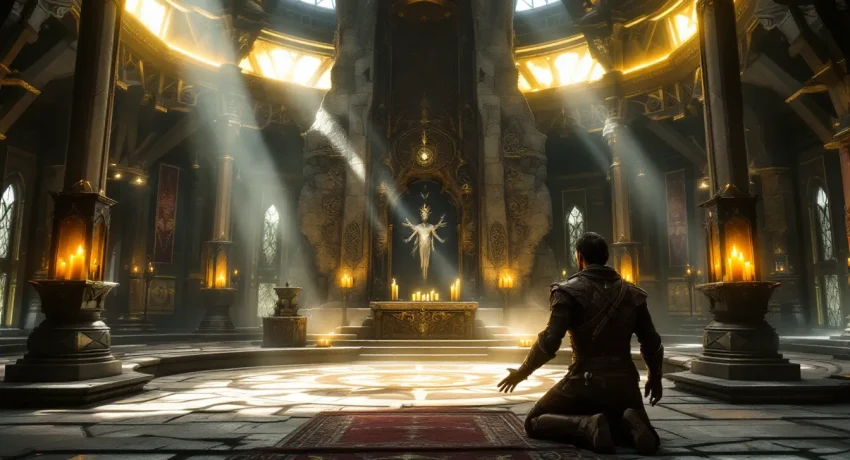

Shrine blessings are one of those features that many players activate once and then completely forget about. They’re not flashy, they don’t have dramatic visual effects, and the game doesn’t really push them in your face. But if you’re running around Skyrim without an active blessing, you’re leaving free stat boosts on the table, and in a game where every edge matters, that’s a mistake.
Whether you’re running a tanky Nord warrior, a glass-cannon mage, or a sneaky Khajiit archer, there’s a blessing tailored to your playstyle. Some shrines are tucked inside major cities, while others hide in forgotten corners of the map. Understanding which blessing to pick, where to find it, and how to swap it out can make a noticeable difference in combat, exploration, and even speech checks.
This guide breaks down every shrine blessing in Skyrim, where to find them, which builds benefit most, and how to manage these divine buffs without accidentally losing them to a Daedric Prince.
Table of Contents
ToggleKey Takeaways
- Skyrim shrine blessings provide free, permanent stat boosts that persist through saves and fast travel, giving players a significant edge without any cost or cooldown.
- Each of the Nine Divines offers a unique blessing tailored to different builds—warriors benefit from Arkay’s health regen, mages from Julianos’s Magicka boost, and archers from Kynareth’s Stamina increase.
- Shrine blessings can be swapped instantly by activating a different shrine, allowing players to adapt their buffs for specific challenges like tough dungeons or dialogue checks.
- Talos blessing reduces Shout cooldown by 20%, making it the most powerful blessing for Shout-heavy builds, though his shrines are hidden due to the White-Gold Concordat ban.
- Vampirism and lycanthropy completely disable shrine blessings, requiring players to cure these conditions through specific quests to restore access to divine buffs.
- Shrine blessings stack perfectly with Standing Stones, potions, enchantments, and quest-granted abilities, enabling powerful layered buff strategies for min-maxed character builds.
What Are Shrine Blessings in Skyrim?
Shrine blessings are temporary buffs granted by activating shrines dedicated to the Nine Divines scattered throughout Skyrim. They’re essentially free stat boosts that stick with the player until certain conditions remove them. Unlike potions or enchantments, blessings don’t stack with each other, but they also don’t consume inventory space or require materials.
How Shrine Blessings Work
Activating a shrine is straightforward: walk up to it and interact. The blessing takes effect immediately and shows up in the active effects menu under “Magic.” Each blessing provides a specific stat bonus, anything from increased health regeneration to speech improvements. The effects are modest but noticeable, especially during early to mid-game progression.
Blessings don’t require any skill checks, prerequisites, or questlines. Even a Level 1 character fresh out of Helgen can grab a blessing from the nearest shrine. There’s no cost, no cooldown, and no limit to how many times a player can reapply a blessing.
Duration and Stacking Rules
By default, shrine blessings last eight in-game hours (roughly 24 real-world minutes at normal timescale). But, most players won’t notice the timer because blessings persist through save files, fast travel, and even sleeping, unless something removes them first.
The two main ways to lose a blessing:
- Activating another shrine: Only one Divine blessing can be active at a time. Praying at a different shrine replaces the current one.
- Becoming a werewolf or vampire: Lycanthropy and vampirism prevent Divine blessings from taking effect. Players need to cure these conditions before shrines work again.
Blessings do not stack with each other, but they coexist peacefully with Standing Stone effects, enchantments, potions, and perks. This makes them a solid layer in any min-maxed build.
All Nine Divines and Their Blessing Effects
The Nine Divines each offer a unique blessing tied to their domain. Some are universally useful, while others cater to specific builds. Here’s the full breakdown.
Akatosh: The Dragon God of Time
Effect: Increases Magicka regeneration by 10%.
Akatosh’s blessing is a solid pick for mages who rely on sustained casting. The 10% boost won’t make or break a build, but during extended dungeon crawls where you’re chain-casting Destruction spells or healing, it adds up. Less useful for warriors and archers who rarely touch Magicka.
Arkay: God of Life and Death
Effect: Increases Health regeneration by 25%.
This is one of the better all-around blessings. Health regen is useful for every build, but it shines brightest on warriors who tank hits in melee range. Combined with enchantments or perks that boost regen further, Arkay’s blessing can turn a slow health crawl into a noticeable recovery rate between fights.
Dibella: Goddess of Beauty and Love
Effect: Increases Speech skill by 10 points.
Dibella’s blessing is niche. It’s fantastic for characters who invest heavily in Speech, merchants, roleplayers, or anyone grinding for better prices and persuasion checks. For combat-focused builds, it’s dead weight. Grab it before major questlines with lots of dialogue options, then swap it out afterward.
Julianos: God of Wisdom and Logic
Effect: Increases Magicka by 25 points.
Julianos is the go-to for pure mages. An extra 25 Magicka translates directly into more spells cast before running dry. It’s especially valuable early game when Magicka pools are still small. Late-game mages with hundreds of Magicka might prefer Akatosh’s regen instead, but Julianos remains a strong default.
Kynareth: Goddess of Air and Nature
Effect: Increases Stamina by 25 points.
Stamina fuels power attacks, sprinting, and bash interrupts, all core mechanics for melee fighters and archers. Kynareth’s blessing is a staple for warriors and anyone using bows heavily. The extra Stamina also helps during exploration, reducing the need to stop and wait for the bar to refill.
Mara: Goddess of Love and Compassion
Effect: Increases Restoration spell effectiveness by 10%.
Mara’s blessing is tailored for Restoration-focused builds. Healers, paladins, and anyone running Restoration as a secondary school benefit from stronger healing spells and wards. For builds that don’t touch Restoration, this blessing does nothing.
Stendarr: God of Mercy and Justice
Effect: Increases Block skill by 10 points.
Stendarr’s blessing is a defensive boost for shield users. Block is already a strong skill tree, and the extra 10 points make bashing and blocking more effective. If you’re running sword-and-board or mace-and-shield, Stendarr is worth considering. One-handed dual-wielders and two-handed users can skip it.
Talos: The God-Hero of Mankind
Effect: Reduces Shout cooldown by 20%.
Talos offers one of the most unique and powerful blessings in the game. Faster Shout recovery means more frequent uses of Unrelenting Force, Whirlwind Sprint, Marked for Death, and every other Thu’um. For builds centered around Shouts, or anyone who uses them tactically, Talos is borderline mandatory. The catch: Talos worship is banned in Skyrim, so his shrines are rare and often hidden.
Zenithar: God of Work and Commerce
Effect: Increases Bartering prices by 10%.
Zenithar’s blessing is pure economy. Better buying and selling prices help players stockpile gold faster, which matters most during early to mid-game when funds are tight. Late-game, when gold becomes trivial, Zenithar loses relevance. Pair it with Speech perks and enchantments for maximum merchant exploitation.
Where to Find Every Shrine in Skyrim
Shrines are scattered across Skyrim in cities, temples, and remote wilderness locations. Some are easy to stumble upon, while others require deliberate exploration.
Major Temple Locations
Most cities have at least one temple housing multiple shrines. These are the safest and most convenient places to grab blessings:
- Temple of the Divines (Solitude): Contains shrines to all Eight Divines (excluding Talos). This is the most accessible one-stop shop for blessings.
- Temple of Kynareth (Whiterun): Dedicated to Kynareth, located in the Wind District. Quick access if you’re hanging around Whiterun frequently.
- Temple of Mara (Riften): Mara’s primary shrine. Also the location for marriage ceremonies.
- Hall of the Dead locations: Nearly every city has a Hall of the Dead with an Arkay shrine. Great for health regen blessings on the go.
- Temple of Dibella (Markarth): Dibella’s main shrine. Tied to the quest “The Heart of Dibella.”
These temples are safe, unmarked, and accessible even during hostile faction quests. Players following traditional Skyrim progression will naturally encounter most of them.
Hidden and Remote Shrines
Some shrines sit in the wilderness, often guarded or tucked inside dungeons:
- Shrine of Talos (various): Talos shrines are scattered throughout Skyrim due to the White-Gold Concordat ban. Notable locations include the path to High Hrothgar, near Froki’s Shack, and inside various Stormcloak camps.
- Shrine of Akatosh (Lake Geir): A small island shrine southeast of Ivarstead. Peaceful and scenic.
- Shrine to Zenithar (Markarth): Found inside the Temple of Dibella.
- Roadside shrines: Occasionally, small shrines appear along major roads, especially near crossroads or near significant landmarks. These are easy to miss but offer quick blessings during travel.
For completionists or achievement hunters, tracking down every shrine is a worthwhile side goal. Many community resources on modding hubs add map markers for shrine locations to streamline this process.
Daedric Shrine Blessings and Curses
How Daedric Shrines Differ from Divine Shrines
Daedric shrines operate on completely different rules than Divine shrines. Instead of granting passive stat buffs, Daedric shrines initiate quests to earn powerful Daedric artifacts. Activating a Daedric shrine doesn’t give a blessing, it starts a conversation with the Daedric Prince, who then demands a task in exchange for their artifact.
Unlike Divine shrines, Daedric shrines are:
- Quest-locked: Most require a minimum level (usually 10-20) to activate.
- One-time use: Once the quest is complete and the artifact is claimed, the shrine becomes inactive.
- Not tied to blessings: Daedric Princes don’t grant temporary buffs. They give permanent items instead.
Notable Daedric Shrine Effects
While Daedric shrines don’t provide blessings, some Daedric quests involve temporary effects or curses:
- Azura’s Star quest (The Black Star): No blessing, but the reward is a reusable soul gem, one of the best items in the game.
- Boethiah’s Calling: Requires sacrificing a follower. No blessing, but the Ebony Mail artifact is a top-tier stealth armor piece.
- Namira’s Ring: Grants a permanent ability to consume corpses for health and stamina after completing “The Taste of Death.”
- Hircine’s Ring: Allows unlimited werewolf transformations per day, bypassing the normal once-per-day limit.
Some players confuse Daedric artifacts with blessings because a few (like Namira’s Ring) provide passive effects. But, these are permanent abilities tied to equipped items or completed quests, not temporary buffs like Divine blessings.
One exception: Becoming a Vampire Lord or Werewolf through Daedric influence blocks Divine blessings entirely. This is one of the few ways Daedric and Divine mechanics directly conflict.
Best Blessings for Different Character Builds
Not all blessings are created equal. The right choice depends entirely on playstyle and stat priorities.
Warrior Builds
Melee-focused characters benefit most from survivability and sustained combat performance:
- Top pick: Arkay – The 25% health regen boost keeps warriors in the fight longer without chugging potions.
- Runner-up: Kynareth – Extra Stamina fuels more power attacks and defensive bashes.
- Situational: Stendarr – If running a shield build, the Block boost makes tanking hits more efficient.
Two-handed weapon users lean toward Kynareth, while sword-and-board tanks favor Arkay. Both are solid, and swapping between them based on dungeon difficulty is common among experienced players.
Mage Builds
Mages live and die by Magicka management:
- Top pick: Julianos – Flat Magicka increase means more spells cast before running dry.
- Runner-up: Akatosh – Magicka regen is more valuable during prolonged fights or when avoiding Magicka potions.
- Situational: Mara – Restoration-focused builds (healers, paladins) get the most mileage from stronger healing spells.
Pure Destruction mages prefer Julianos early game, then shift to Akatosh once their Magicka pool is large enough. Restoration builds should lock in Mara and rarely swap.
Thief and Stealth Builds
Thieves and assassins have fewer blessing synergies, but a few stand out:
- Top pick: Talos – Faster Shout cooldowns mean more frequent uses of Throw Voice (for distractions) or Slow Time (for sneak attacks).
- Runner-up: Kynareth – Stamina fuels sprinting and power shots with bows.
- Situational: Dibella or Zenithar – Speech boosts help with pickpocketing checks and fence prices. Zenithar is better for gold farming.
Archery-heavy stealth builds lean toward Kynareth for sustained combat, while pure thieves (lockpicking, pickpocketing, sneaking) benefit more from Speech or economy blessings. Many detailed build breakdowns explore these synergies further.
How to Remove and Replace Blessings
Swapping blessings is as simple as activating a different shrine. The new blessing immediately overwrites the old one, no confirmation prompt, no cooldown.
But, there are a few edge cases worth knowing:
Vampirism and Lycanthropy block all Divine blessings. If a player transforms into a werewolf or contracts vampirism, shrines become unusable. The game doesn’t explicitly warn about this, so it’s a common source of confusion. To restore shrine functionality:
- Cure vampirism: Complete the “Rising at Dawn” quest or become a Vampire Lord through the Dawnguard DLC, then cure it via Falion in Morthal.
- Cure lycanthropy: Throw a Glenmoril Witch head into the fire at Ysgramor’s Tomb during or after the Companions questline.
Once cured, shrines work normally again.
Blessings persist through saves and fast travel. Unlike some temporary buffs, blessings don’t expire when saving, loading, or teleporting across the map. The eight-hour timer continues ticking, but since it resets to full duration every time the player revisits a shrine, most players never see a blessing expire naturally.
No penalty for swapping frequently. There’s no negative consequence for changing blessings multiple times in a single session. Players can grab Arkay before a tough dungeon, swap to Dibella before a Speech check, then return to Arkay afterward. Shrines are unlimited-use, so there’s no reason to hesitate.
One quirk: Some mods add blessing cooldowns or restrict shrine access. Vanilla Skyrim has no such limits, but heavily modded playthroughs (especially survival or hardcore overhauls available through platforms like Nexus Mods) may change shrine behavior entirely.
Advanced Tips for Maximizing Shrine Benefits
Combining Blessings with Standing Stones
Standing Stones and shrine blessings stack without conflict, which opens up layered buff strategies. For example:
- Mage Stone + Julianos blessing: Faster Magicka skill leveling plus extra Magicka pool.
- Warrior Stone + Arkay blessing: Faster combat skill leveling plus better health regen.
- Thief Stone + Talos blessing: Faster stealth skill leveling plus more frequent Shout usage.
The key is matching both buffs to the same playstyle. There’s no mechanical interaction between the two systems, so players can freely swap Standing Stones and blessings independently.
One popular combo: Atronach Stone + Akatosh blessing. The Atronach Stone grants a massive Magicka boost and 50% spell absorption but tanks Magicka regen. Akatosh’s 10% regen partially offsets this penalty, making the combo viable for hybrid builds.
Quest-Related Blessing Bonuses
A few quests grant unique, permanent “blessing-like” effects that stack with shrine blessings:
- Agent of Mara (Temple of Mara quest): Permanent 15% Magic Resistance. Stacks with Mara’s blessing.
- Agent of Dibella (The Heart of Dibella): Permanent +10% melee damage to the opposite sex. Stacks with Dibella’s blessing.
- Blessing of Talos (kill Kematu during “In My Time of Need”): Some playthroughs grant a hidden Talos blessing bonus, though this is inconsistent.
These are permanent passive abilities, not temporary buffs, so they don’t count against the “one blessing at a time” rule. Players can stack them freely with any shrine blessing.
Another edge case: Some NPC healers restore health and apply a temporary blessing. Vigilants of Stendarr, for example, occasionally grant a short-duration Stendarr blessing when healing the player. This is separate from shrine blessings and lasts only a few minutes. Resources like Shacknews guides often document these hidden interactions.
Conclusion
Shrine blessings are one of the most underutilized tools in Skyrim. They’re free, they’re everywhere, and they offer meaningful stat boosts that complement nearly every build. Whether it’s Arkay’s health regen keeping a warrior alive, Julianos padding a mage’s Magicka pool, or Talos shaving seconds off Shout cooldowns, these buffs add up over hundreds of hours of gameplay.
The flexibility to swap blessings on the fly means there’s no wrong time to visit a shrine. Heading into a tough dungeon? Grab Arkay. Need to persuade a quest NPC? Swap to Dibella. Planning a shopping trip? Zenithar’s got your back. And if you’re running a Shout-heavy build, Talos is non-negotiable.
Don’t sleep on these buffs. Next time you pass a temple or roadside shrine, take the five seconds to activate it. Your stat bar will thank you.